Summary
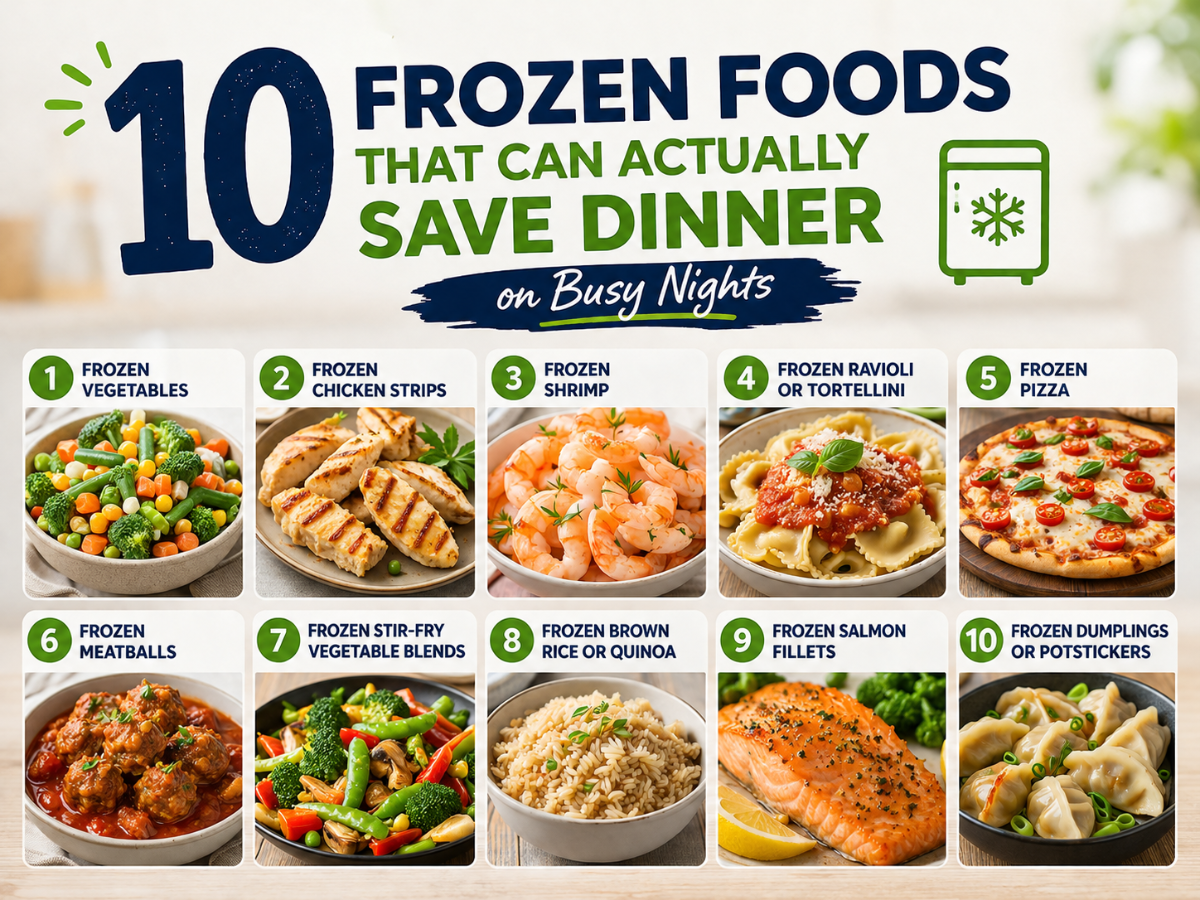
Discover 10 frozen foods that can actually save dinner on busy nights. From frozen vegetables to salmon and ravioli, these freezer staples make quick, easy, and delicious meals in minutes. The post 10 Frozen Foods That Can Actually Save Dinner on Busy Nights appeared first on The Sunday Guardian .
Source: The Sunday Guardian

AI News Q&A (Free Content)
Q1: What are some top frozen foods that can save dinner on busy nights according to current trends?
A1: According to current trends, top frozen foods that can save dinner on busy nights include various prepared meals such as Bertolli Shrimp Penne & Asparagus, Trader Joe’s Vegetable Pad Thai, and store-bought frozen meatballs. These options are praised for their convenience and quality, offering quick meal solutions without compromising on taste.
Q2: How has the technology of freezing food evolved to preserve its quality and texture?
A2: The technology of freezing food has evolved with advancements like cryogenic freezing, which involves ultra-low temperatures using liquid nitrogen to quickly freeze food. This method helps in maintaining the quality and texture by forming smaller ice crystals, preserving the cellular structure of food more effectively compared to traditional methods.
Q3: What are some recommended plant-based frozen foods for maintaining a balanced vegetarian diet?
A3: Recommended plant-based frozen foods for maintaining a balanced vegetarian diet include foods rich in essential nutrients like immature lima beans and mushrooms. These foods provide essential amino acids, choline, and vitamin D, which are vital for vegetarians, as identified in recent nutritional research focused on vegetarian diets.
Q4: What health impacts can frozen foods have according to recent scientific studies?
A4: Recent scientific studies suggest that frozen foods can be part of a healthy diet if they are chosen wisely. The nutritional content of frozen foods is often comparable to fresh foods, as freezing preserves vitamins and minerals. However, it is important to be mindful of the sodium and preservatives that some frozen meals may contain.
Q5: What benefits do frozen meals offer in terms of sustainability and environmental impact?
A5: Frozen meals can offer sustainability benefits by reducing food waste and allowing for portion-controlled meals. Studies have shown that frozen foods can have a lower carbon footprint when they are chosen with environmental considerations in mind, such as opting for meals with a lower climate impact score.
Q6: How can frozen foods be integrated into a healthy eating plan?
A6: Frozen foods can be integrated into a healthy eating plan by selecting options that are low in sodium and free from artificial preservatives. Incorporating a mix of frozen vegetables and lean proteins can provide a balanced meal option. Preparing homemade frozen meals with fresh ingredients can also ensure better control over nutritional content.
Q7: What are some innovative uses of frozen foods in meal preparation?
A7: Innovative uses of frozen foods in meal preparation include using frozen scone dough to quickly prepare a variety of baked goods, and utilizing frozen tortillas for wraps and quick-fix meals like breakfast burritos and quesadillas. Creativity in using frozen ingredients can lead to diverse and satisfying meal options.
References:
- Nutritionally recommended food for semi- to strict vegetarian diets based on large-scale nutrient composition data
- Frozen mode in an asymmetric serpentine optical waveguide
- Nudging Toward Sustainable and Healthy Diets: A Randomized Trial of Young Adults.