Summary
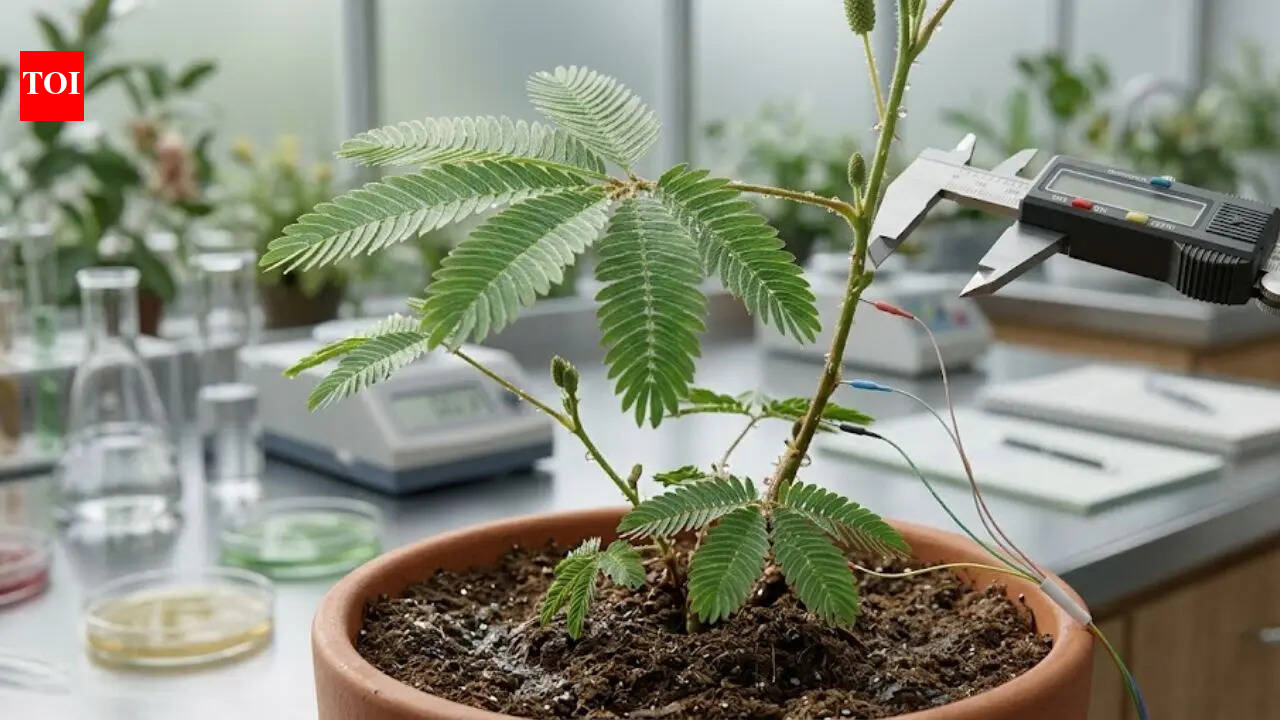
Science News: Scientists have discovered that Mimosa pudica, known as the shy plant, possesses the capacity for enumeration. This finding suggests intelli…
Source: timesofindia.indiatimes.com

AI News Q&A (Free Content)
Q1: What is unique about the Mimosa pudica and its reaction to touch?
A1: Mimosa pudica, often called the 'shy plant' or 'touch-me-not', has a unique reaction to stimuli such as touch or shaking. Its compound leaves quickly fold inward and droop, reopening a few minutes later. This rapid plant movement is a part of its nyctinastic movement, where the foliage closes in darkness and reopens in light. This characteristic movement has made it a plant of considerable curiosity and study.
Q2: How might plants like Mimosa pudica exhibit counting abilities without a brain?
A2: Recent research suggests that Mimosa pudica may be able to 'count' or track discrete events in its environment, despite lacking neurons. The plant was observed to maintain a pattern of leaf movement based on the number of light-dark cycles it experienced, indicating a form of non-neuronal information processing. This discovery hints at a primitive form of memory or learning, challenging traditional views on plant cognition.
Q3: What are some scientific theories explaining the cognitive-like functions in plants?
A3: One theory is that plants may process environmental information through biochemical pathways similar to those governing circadian rhythms. In the case of Mimosa pudica, experiments showed that it could adjust its leaf movement according to the number of light cycles, suggesting an ability to abstract numerical information from environmental cues. This raises the possibility of non-neuronal cells in plants and animals participating in learning processes.
Q4: What role does Mimosa pudica play in plant-based innovations?
A4: Mimosa pudica has inspired technological innovations, such as kinetic façade designs that improve air quality and energy efficiency indoors by mimicking the plant's responsive movements. It is also being explored for its potential in creating plant-based biopreservatives in the food industry, leveraging its antimicrobial properties to extend shelf life naturally.
Q5: Are there any potential health benefits associated with Mimosa pudica?
A5: Mimosa pudica contains several bioactive compounds, such as mimosine, which have been attributed with various pharmacological effects, including antioxidant, antibacterial, anti-inflammatory, and hypoglycemic activities. It is used in traditional medicine to treat conditions like cancer, diabetes, and infections, showcasing its potential as a source of therapeutic agents.
Q6: How has the Mimosa pudica been used in sustainable technology?
A6: Researchers have developed a technology using Mimosa pudica seeds capable of generating electricity. This innovation transforms the seeds into hydrogels that convert physical pressure into electricity, offering a biodegradable and non-toxic alternative for powering medical implants and wearable devices, reducing reliance on harmful materials.
Q7: What findings have scientific studies revealed about Mimosa pudica's ability to respond to environmental changes?
A7: Studies have shown that Mimosa pudica can adjust its leaf movements based on the number of light stimuli received, suggesting an ability to track environmental changes beyond simple circadian rhythms. This response highlights the plant’s sophisticated mechanism for adapting to its environment, which may involve a primitive form of information processing akin to counting.