Summary
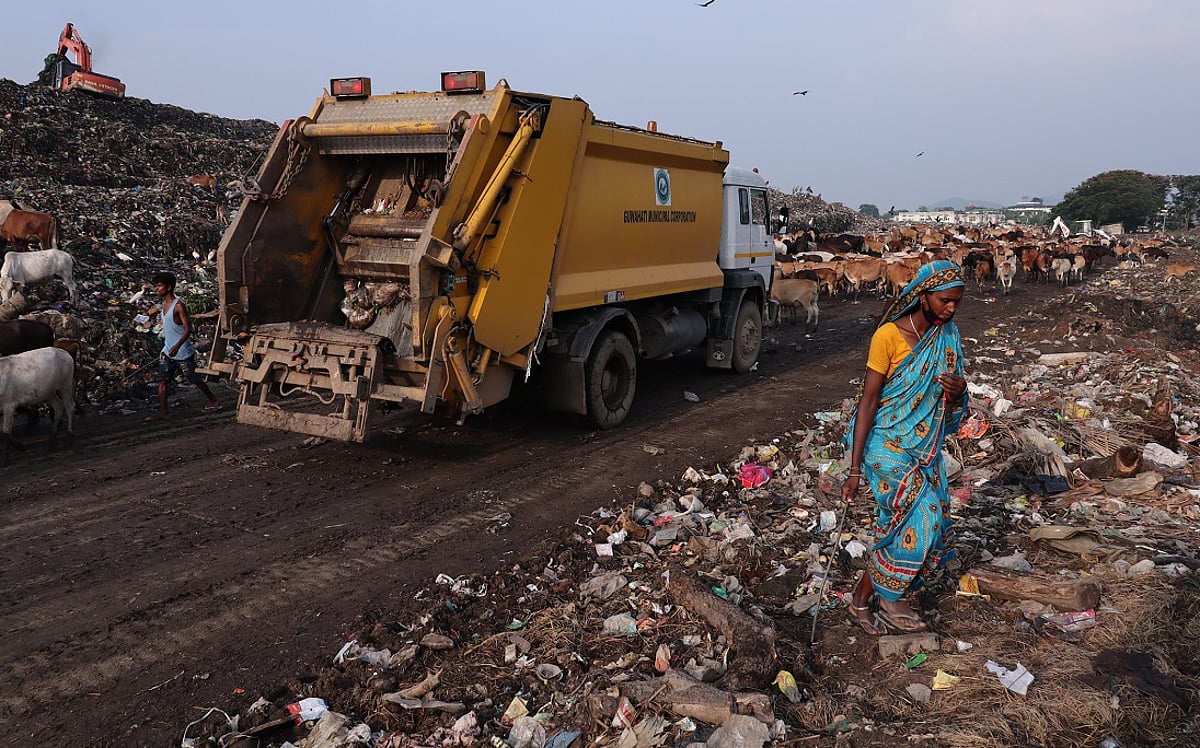
Every morning, while the city is still slowly waking up, a woman walks along a familiar route. She navigates through narrow lanes, moving past trash bins to collect items that can still be sold, like plastic bottles, scraps of metal, cardboard, and glass. After carefully sorting through these items,…
Source: Down To Earth

AI News Q&A (Free Content)
Q1: What role do informal waste workers play in India's waste management system?
A1: Informal waste workers, often referred to as 'rag pickers', are crucial to India's waste management system. They collect, sort, and recycle waste materials such as plastics, metals, and glass, which are then reintegrated into the economy. Despite their significant contribution to environmental sustainability, these workers face systemic marginalization and lack recognition, social security, and legal protection. Their work helps reduce the waste collection costs for the government and contributes significantly to resource recovery in developing economies like India.
Q2: How does the lack of recognition affect the livelihood of waste workers in India?
A2: The lack of recognition severely affects the livelihoods of waste workers in India. They often work without any legal protection or social security, making them vulnerable to exploitation and abuse. Many waste workers, particularly women and children from marginalized communities, face discrimination and are denied access to necessary support and identification. This invisibility exacerbates their poverty and limits their opportunities for better livelihoods.
Q3: What are the health risks faced by informal waste workers in India?
A3: Informal waste workers in India face significant health risks due to their work environment, which is often unsanitary and hazardous. They are exposed to infections and communicable diseases while handling waste. The informal nature of their work means they lack adequate protective gear and healthcare access, increasing their vulnerability to health issues.
Q4: What challenges do informal waste workers encounter in integrating into the formal waste management system?
A4: Informal waste workers encounter several challenges in integrating into the formal waste management system. These include lack of legal recognition, inadequate access to waste resources, and absence of partnerships with urban local bodies. They also face issues with income security, identity documentation, and access to government welfare schemes. Addressing these challenges can help integrate them effectively into the formal system, improving waste management outcomes.
Q5: What percentage of plastic waste is managed by informal workers in India?
A5: Informal sector waste workers in India manage approximately 20% to 30% of the total plastic waste generated. Their efforts in collecting and segregating recyclable materials are a significant part of India's waste management strategy, helping to reduce environmental impact and resource wastage.
Q6: How does the integration of informal waste workers benefit India's waste management system?
A6: Integrating informal waste workers into India's waste management system can significantly enhance its efficiency and sustainability. By recognizing and formally incorporating these workers, the system can leverage their existing knowledge and networks for better resource recovery and recycling processes. This integration can also provide these workers with improved access to social security, legal protection, and economic opportunities.
Q7: What are the potential solutions to improve the conditions of informal waste workers in India?
A7: Potential solutions to improve the conditions of informal waste workers include providing legal recognition and protection, access to identity documents, and inclusion in government welfare schemes. Training and supporting them in entrepreneurial activities can also help. Policies that integrate them into the formal waste management system and collaborations with urban local bodies can ensure better working conditions and economic security for these workers.