
Summary
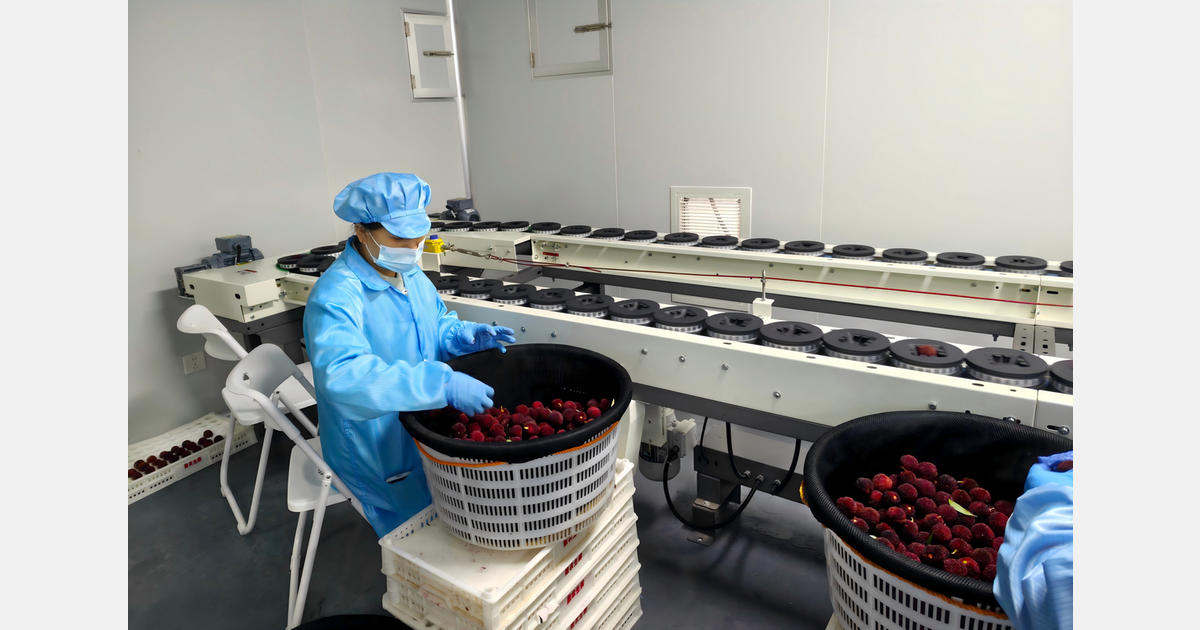
The short shelf life and difficult transportation of bayberries have long been major bottlenecks limiting their export. Traditionally, the shelf life of bayberries is around 3 to 7 days. Our core technology extends this to a maximum of 28 days through physical methods. This independently developed …
Source: FreshPlaza

AI News Q&A (Free Content)
Q1: What are the traditional challenges associated with the shelf life and transportation of bayberries?
A1: Bayberries traditionally have a short shelf life of about 3 to 7 days, which poses significant challenges in terms of transportation and export. These challenges have historically limited their export potential due to the difficulty in maintaining freshness during long-distance travel.
Q2: How does the new technology extend the shelf life of bayberries to 28 days?
A2: The new technology extends the shelf life of bayberries to 28 days using physical methods. This involves installing specialized equipment in transport containers that generate a 10,000-volt voltage, creating an electromagnetic field. This field affects molecular activity in the bayberries, preventing freezing and ice crystal formation even at ultra-low temperatures, thereby maintaining freshness without chemical residues.
Q3: What are the benefits of this shelf life extension technology for bayberry exports?
A3: The technology has significantly improved export capacity for bayberries, allowing for full-container exports. Traditionally limited to single pallet shipments (1,000-2,000 kilograms), the technology enables shipments of 5,000-10,000 kilograms per container. This facilitates longer transportation distances, with the longest achieved being approximately 11,000 kilometers, with bayberries arriving in excellent condition.
Q4: What were the findings of the study on Chinese bayberry fruit treated with heat and 1-MCP regarding shelf life extension?
A4: The study found that treating Chinese bayberry fruit with heat and 1-MCP delayed decay and maintained higher activity of enzymes like superoxide dismutase, peroxidase, and catalase compared to untreated fruit. This treatment helped in extending the storage period by preventing early decay, indicating a crucial period around the sixth day of storage for the treated bayberries.
Q5: What are some common methods used to extend the shelf life of fresh produce, and how do they apply to bayberries?
A5: Methods to extend the shelf life of fresh produce include packaging improvements like Modified Atmosphere Packaging (MAP), controlling ethylene exposure, temperature management, and improving handling procedures. For bayberries, these methods can help in maintaining firmness and freshness during extended transportation.
Q6: What economic impacts does the improved shelf life technology have on the bayberry market?
A6: The improved shelf life technology enables more stable and consistent supply chains, reducing food waste and loss. It allows producers to capitalize on larger export markets, improving margins and enhancing brand reputation by ensuring high-quality produce reaches distant markets.
Q7: How does the use of electromagnetic fields in the new technology compare to traditional chemical preservation methods?
A7: Unlike traditional chemical preservation methods that can leave residues, the use of electromagnetic fields in the new technology maintains freshness without chemical residues. This physical method ensures the bayberries remain in excellent condition during transport, appealing to markets that prioritize chemical-free produce.
References:
- Transcriptome analysis of Chinese bayberry (Myrica rubra Sieb. et Zucc.) fruit treated with heat and 1-MCP