Summary
Walmart has a need for speed.
Loading audio narration…
The retail giant has been growing its online business for years, fueled in large part by its ability to get groceries to customers in nearly every part of the US within hours.
But doubling down on digital is revealing some growing pains, to…
Source: Business Insider

AI News Q&A (Free Content)
Q1: How has Walmart's online grocery delivery boom impacted its store workers?
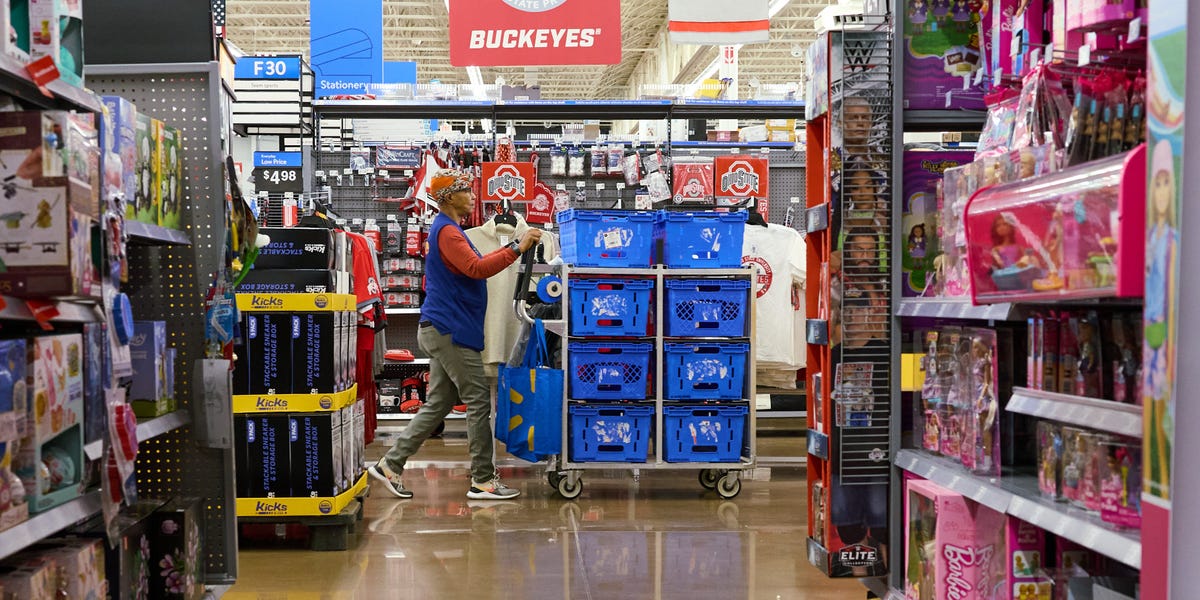
A1: Walmart's online grocery delivery boom has significantly impacted store workers by increasing their workload and creating new challenges. The company's focus on quick delivery times has put additional pressure on workers to meet digital metrics while handling heavier orders. Workers have reported issues like shoulder strain and running over their heels due to the new cart handling rules. Despite reducing the number of bins on carts to improve visibility, workers find it tougher to keep orders on time when short-staffed.
Q2: What innovative strategies is Walmart employing to enhance its online grocery delivery service?
A2: Walmart is testing various innovative strategies to enhance its online grocery delivery service, including a pilot program where store employees deliver goods on their way home. This initiative aims to leverage existing staff to provide quick, doorstep delivery services, potentially competing with Amazon and other delivery companies. Although the program faced skepticism and was ultimately ended, it reflects Walmart's efforts to discover unconventional methods to improve delivery efficiency.
Q3: What are the societal impacts of the rapid growth in online grocery shopping as discussed in recent research?
A3: Recent research highlights that rapid growth in online grocery shopping increases urban traffic congestion, emissions, and pollution. A study on urban delivery systems suggests that slight increases in delivery times, termed customer patience, can significantly reduce traffic and emissions. Allowing just five additional minutes for delivery can decrease daily delivery mileage by approximately 30% and CO2 emissions by 20%, showcasing the environmental benefits of balancing convenience with societal welfare.
Q4: How is Walmart's InHome Delivery service attempting to differentiate itself from other grocery delivery platforms?
A4: Walmart's InHome Delivery service seeks to differentiate itself by offering a unique delivery experience where workers enter customers' homes to place groceries directly into their refrigerators. This service, costing $19.95 per month, aims to provide convenience and secure a competitive edge against Amazon, DoorDash, and Instacart. Its extensive network of stores facilitates this service, potentially giving Walmart an advantage in the $93 billion grocery delivery market.
Q5: What challenges do delivery workers face in the e-commerce sector, particularly in grocery delivery?
A5: Delivery workers in the e-commerce sector, especially in grocery delivery, face challenges such as low pay, job insecurity, and inadequate employment protections. Many are hired as independent contractors, lacking benefits and facing unstable earnings. The growth of e-commerce has increased job opportunities, but workers often encounter poor working conditions and health risks, highlighting the need for more robust employment regulations and union support to improve job quality.
Q6: According to recent studies, how can consumer behavior in online grocery shopping be better understood and utilized?
A6: Recent studies using Latent Dirichlet Allocation (LDA) models have shown that consumer behavior in online grocery shopping can be better understood by analyzing shopping motivations and transactional data. These models help identify recurrent shopping topics, improving the interpretability and stability of consumer patterns. Such insights are valuable for grocery retailers to tailor their strategies and enhance customer satisfaction, ultimately boosting sales and loyalty.
Q7: What lessons has Walmart learned from its failed employee delivery initiative?
A7: Walmart learned several lessons from its failed employee delivery initiative, including the importance of employee buy-in and the challenges of integrating additional tasks into existing roles. The initiative faced resistance from workers required to deliver orders after their regular shifts, leading to its discontinuation. This experience underscores the need for careful consideration of employee workload and motivation when implementing new operational strategies in retail.
References:
- The Value of Patience in Online Grocery Shopping
- Published: 2025-10-21
- Modelling Grocery Retail Topic Distributions: Evaluation, Interpretability and Stability
- Published: 2021-02-24