Summary
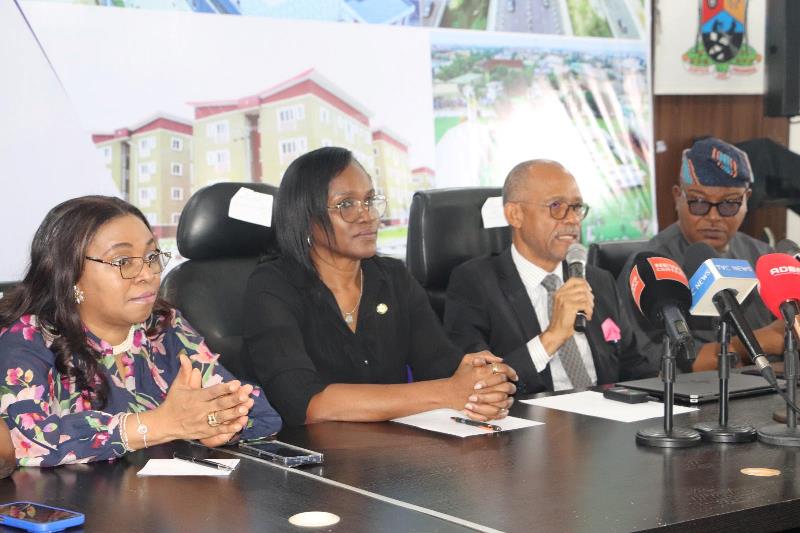
The Lagos State Government has unveiled a new wave of healthcare financing, workforce and infrastructure reforms aimed at closing a projected N100 billion funding gap in the health sector and positioning the state as one of Africas leading healthcare destinations.
Source: Pm News Nigeria

AI News Q&A (Free Content)
Q1: What healthcare financing reforms has the Lagos State Government introduced to bridge the N100bn funding gap?
A1: The Lagos State Government has introduced mandatory health insurance, expanded healthcare infrastructure, workforce development, and strengthened public-private partnerships as part of its healthcare financing reforms. These measures aim to boost enrolment under the Lagos State Health Management Agency's Ilera-Eko health insurance scheme and create a sustainable financing pool to strengthen healthcare facilities, improve infrastructure, and support vulnerable residents through equity-based funding mechanisms.
Q2: How is the private sector involved in Lagos' healthcare reforms, and what role does it play?
A2: The private sector is crucial in Lagos's healthcare reforms, with strengthened collaboration identified as key to mobilizing resources needed to bridge the N100bn funding gap. Over 3,500 registered private health facilities operate across the state, contributing significantly to healthcare delivery alongside government hospitals. Enhanced public-private partnerships are part of the reforms to achieve universal health coverage.
Q3: What are some challenges Lagos faces in achieving its healthcare reform goals?
A3: Lagos faces challenges such as healthcare delivery extending beyond government hospitals, requiring coordination across numerous private and informal providers. The state allocates only 8% of its budget to health, below the 15% recommended by the Abuja Declaration, necessitating alternative financing mechanisms to sustain healthcare delivery. Furthermore, digital health integration and improved workforce planning are needed to strengthen primary healthcare services.
Q4: What are the key components of the Lagos State Health Management Agency’s Ilera-Eko scheme?
A4: The Ilera-Eko scheme is an integral part of Lagos's health reforms, aiming to increase health insurance enrolment and create a sustainable financing pool. It stands as a solidarity mechanism where the healthy support the sick and the wealthy support the poor, aligning with the broader goal of universal health coverage. The scheme currently has over 1.46 million enrollees.
Q5: How does the National Health Insurance Authority (NHIA) Act of 2022 influence Lagos' health insurance reforms?
A5: Lagos's health insurance reforms are influenced by the NHIA Act of 2022, which mandates health insurance for all residents and establishes enforcement mechanisms for compliance. The state has set up a multi-stakeholder Technical Working Group to align private sector participation with policy direction, risk pooling, and digital accountability, further driving universal health coverage through the Lagos State Health Management Agency.
Q6: What recent scholarly works discuss the role of machine learning in healthcare and its potential benefits?
A6: Recent scholarly works, such as the paper titled 'Privacy-preserving machine learning for healthcare: open challenges and future perspectives,' discuss the role of machine learning (ML) in healthcare. ML has shown success in disease diagnosis, prognosis, and patient treatment. The paper emphasizes the need for privacy-preserving ML models to handle sensitive medical data efficiently, which could significantly enhance healthcare services.
Q7: How does federated learning contribute to advancements in healthcare, and what are its challenges?
A7: Federated learning allows the development of machine learning models over datasets distributed across data centers, like hospitals and clinical research labs, without data leakage. It contributes to healthcare by enabling collaborative data analysis without compromising patient privacy. Challenges include ensuring data privacy, the complexity of distributed computing, and the need for coordination among various data sources.
References:
- https://thesun.ng/lagos-unveils-sweeping-health-reforms-to-bridge-n100bn-funding-gap/", "https://healthwise.punchng.com/lagos-seeks-private-sector-partnerships-to-close-n100bn-healthcare-funding-gap/", "https://lagosministryofhealth.org/lagos-unveils-landmark-health-financing-reforms-launches-lphp-to-drive-universal-health-coverage/", "https://www.tchealthng.com/thought-pieces/bridging-the-funding-gap-in-healthcare-infrastructure", "https://pubmed.ncbi.nlm.nih.gov/36494682/", "https://pubmed.ncbi.nlm.nih.gov/35824408/