Summary
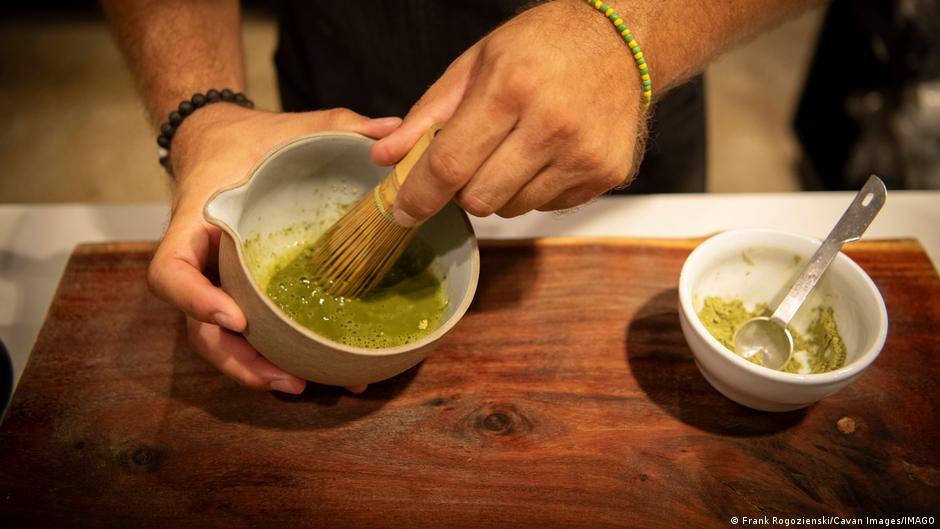
Japan is a nation of tea drinkers and famous for matcha. The super food has become a hit on social media around the world, in part due to its bright green color. Farmers are enjoying the hype.
Japanese matcha tea is regarded as a super food in many countries. In Japan, tea farmers are profiting fro…
Source: dw.com

AI News Q&A (Free Content)
Q1: How has the global demand for matcha impacted tea farmers in Japan?
A1: The surge in global demand for matcha has significantly benefited Japanese tea farmers. Japan's matcha production has almost tripled, with more than half of it being exported as of 2023. The Japanese government's support for increased production through subsidies has helped farmers switch from traditional tea types to tencha, the raw material for matcha. This demand spike has also led to higher market valuations and export revenues, further boosting the farmers' economic prospects.
Q2: What are some of the health benefits of matcha tea according to recent studies?
A2: Recent studies have highlighted several health benefits of matcha tea. For instance, it has been shown to improve cardio-metabolic health by enhancing glucose-insulin homeostasis and reducing cholesterol levels. Additionally, research indicates that matcha can enhance brain function, improve attention, and promote heart health. These benefits are largely attributed to its high antioxidant content and bioactive compounds like theanine and catechins.
Q3: In what ways has matcha consumption changed in Western markets, and what are the implications?
A3: In Western markets, matcha consumption has evolved from traditional tea ceremonies to more modern formats, such as matcha lattes and flavored beverages. This shift is largely driven by social media and a growing wellness trend among younger generations. The implications include a bifurcation of the market into mass-market flavored products and a premium segment focused on traditional preparation, mirroring trends seen in the specialty coffee industry.
Q4: What are the current challenges faced by matcha producers in maintaining supply amid rising demand?
A4: Matcha producers are grappling with challenges such as limited agricultural land, climate change impacts, and the need for traditional production methods, which can hinder scalability. Japan's geography limits expansion capabilities, and abnormal weather patterns have further stressed production capacities. These challenges have led to supply shortages and increased prices, impacting both local and global markets.
Q5: What economic impact does matcha production have on Japan's economy?
A5: Matcha production significantly contributes to Japan's economy, with exports valued at approximately 36.4 billion Yen in recent years. The global market for matcha is projected to grow at a compound annual growth rate of 7.9% from 2024 to 2030, indicating robust economic prospects. The strong trade relations, especially with the USA, highlight matcha's importance as an export commodity, driving both revenue and trade partnerships.
Q6: What innovations in agriculture are supporting the production of matcha in Japan?
A6: Innovations in agriculture supporting matcha production in Japan include precision agriculture techniques and the integration of artificial intelligence for mission planning in farming operations. These technologies help streamline operations and improve efficiency, allowing farmers to better manage production and respond to increasing demand. Additionally, there is a focus on environmental factors like selenium biofortification to enhance the quality and health benefits of matcha.
Q7: What are the potential benefits of selenium-enriched matcha, according to recent research?
A7: Recent research suggests that selenium-enriched matcha offers enhanced health benefits, including improved antioxidant activity and gut health. Selenium biofortification in matcha has been shown to increase glutathione peroxidase activity, reduce liver and kidney malondialdehyde content, and promote beneficial gut microbiota. These properties make selenium-enriched matcha a promising functional food with superior health benefits compared to regular matcha.
References:
- Matcha - https://en.wikipedia.org/wiki/Matcha
- Japan's matcha boom boosts tea farmers - https://www.dw.com/en/japan-matcha-boom-boosts-tea-farmers/video-77631411
- The mismatch with matcha consumption & Gen Z - https://intelligence.coffee/2026/02/the-mismatch-with-matcha-consumption-gen-z
- The Matcha Boom Continues - https://www.forbes.com/sites/eshachhabra/2026/06/05/the-matcha-boom-continues-to-drive-the-worlds-fastest-growing-tea
- Unpacking the Matcha Shortage - https://gjtea.org/unpacking-the-matcha-shortage-an-insightful-look
- Sipping into the Matcha Market - https://economicsdeclassified.wordpress.com/2025/09/22/sipping-into-the-matcha-market-a-brew-of-trends-and-trade
- Health benefits of matcha tea - https://www.healthline.com/nutrition/7-benefits-of-matcha-tea