Summary
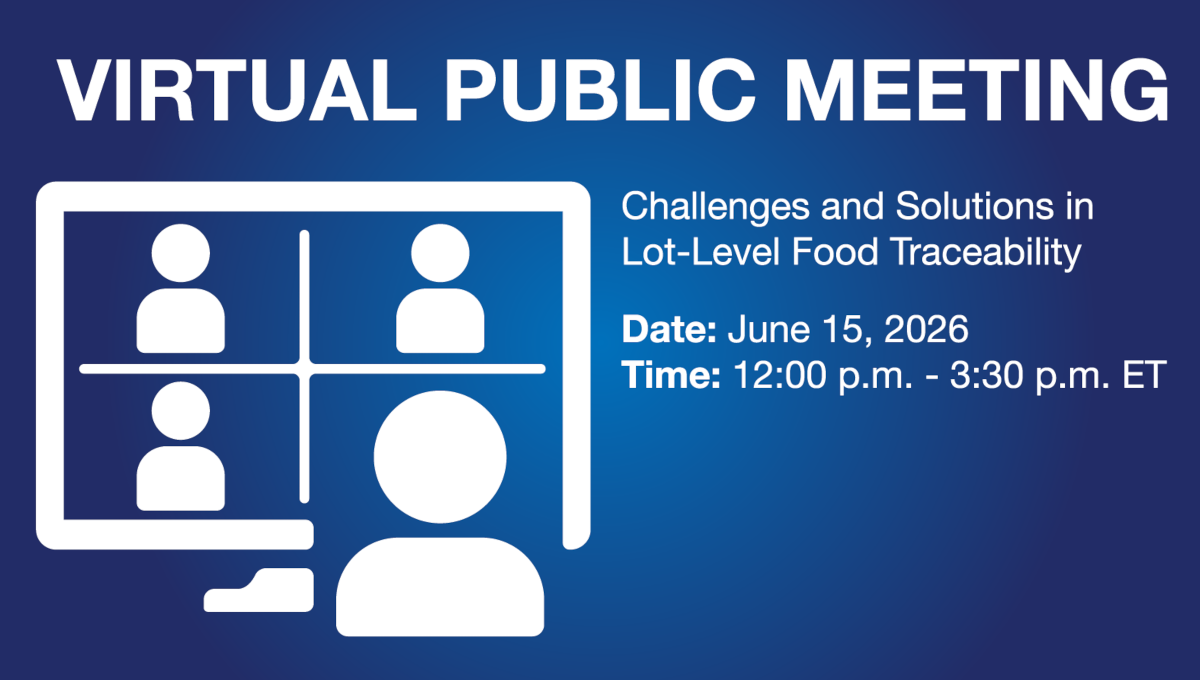
The U.S. Food and Drug Administration has released a discussion paper exploring potential flexibilities in compliance with its Food Traceability Rule. The document is intended to inform stakeholder input ahead of a virtual public meeting scheduled for June 15.
This post is for paying subscribers on…
Source: Food Safety News

AI News Q&A (Free Content)
Q1: What is the purpose of the FDA's discussion paper on the Food Traceability Rule?
A1: The FDA's discussion paper aims to explore potential flexibilities in compliance with the Food Traceability Rule, which requires additional traceability records for certain foods. It is intended to inform stakeholder engagement and gather feedback on the lot-level tracking requirements. This initiative is part of the FDA's efforts to implement the Food Safety Modernization Act (FSMA). The paper is meant to promote deeper and more productive discussions with stakeholders, particularly during a virtual public meeting scheduled for June 15.
Q2: How does blockchain technology influence food traceability according to recent scholarly articles?
A2: Blockchain technology is seen as a promising tool for enhancing transparency in food supply chains. Recent scholarly articles highlight its potential to provide a transparent and secure method for recording transactions and tracking food products from farm to table. However, challenges such as technical barriers, lack of education, and regulatory issues persist, which may hinder the widespread adoption of blockchain in agriculture and food traceability.
Q3: What recent advancements have been made in the field of dairy product traceability?
A3: Recent advancements include the integration of veterinary public health data into EPCIS-based digital traceability systems for dairy supply chains. This system embeds herd health data, milk-quality testing, and inspection outcomes into batch-level records, allowing for more precise traceability and targeted recall decisions. Such systems aim to improve auditability, compliance verification, and reduce food waste by enabling automatic logging of mandatory control points.
Q4: What are the main challenges faced by the FDA in implementing the Food Traceability Rule?
A4: The FDA faces challenges such as identifying flexible approaches to meet lot-level tracking requirements while ensuring food safety and public health protection. Stakeholder feedback indicates difficulties in compliance, particularly regarding the range of traceability lot codes required for distributors shipping to retailers. The agency is actively seeking input to address these challenges and balance regulatory demands with industry capabilities.
Q5: How does the FDA plan to engage stakeholders in the discussion of the Food Traceability Rule?
A5: The FDA plans to engage stakeholders through a virtual public meeting on June 15. The discussion paper provides a framework for these engagements, inviting stakeholders to submit feedback and participate in discussions. The FDA encourages stakeholders to focus their feedback on aspects of the discussion paper that are of particular interest, and to submit their insights by July 15 to help shape the implementation of the rule.
Q6: What are the implications of integrating traceability with public health data in food supply chains?
A6: Integrating traceability with public health data can significantly enhance the safety and efficiency of food supply chains. It allows for systematic compliance verification, automated logging of control points, and more precise recall actions. Such integration supports the generation of regulatory evidence, improves auditability, and reduces food waste by narrowing recall scopes and providing real-time data for decision-making.
Q7: What role do food traceability systems play in global food safety according to recent research?
A7: Food traceability systems are crucial in ensuring global food safety by allowing for quick identification and isolation of contaminated products, thus preventing widespread foodborne illnesses. Recent research emphasizes the role of these systems in enhancing transparency, accountability, and efficiency in food supply chains. They are pivotal in meeting regulatory requirements and protecting public health by enabling rapid response to food safety incidents.
References:
- FDA Releases Discussion Paper Ahead of Traceability Public Meeting June
- The Rise of Blockchain Technology in Agriculture and Food Supply Chains
- Integrating Veterinary Public Health Data into EPCIS-Based Digital Traceability for Dairy Supply Chains
- FDA Releases Discussion Paper: Identifying Additional Flexibilities for Satisfying the Food Traceability Rule’s Lot-Level Tracking Requirement
- Extending FKG.in: Towards a Food Claim Traceability Network