Summary
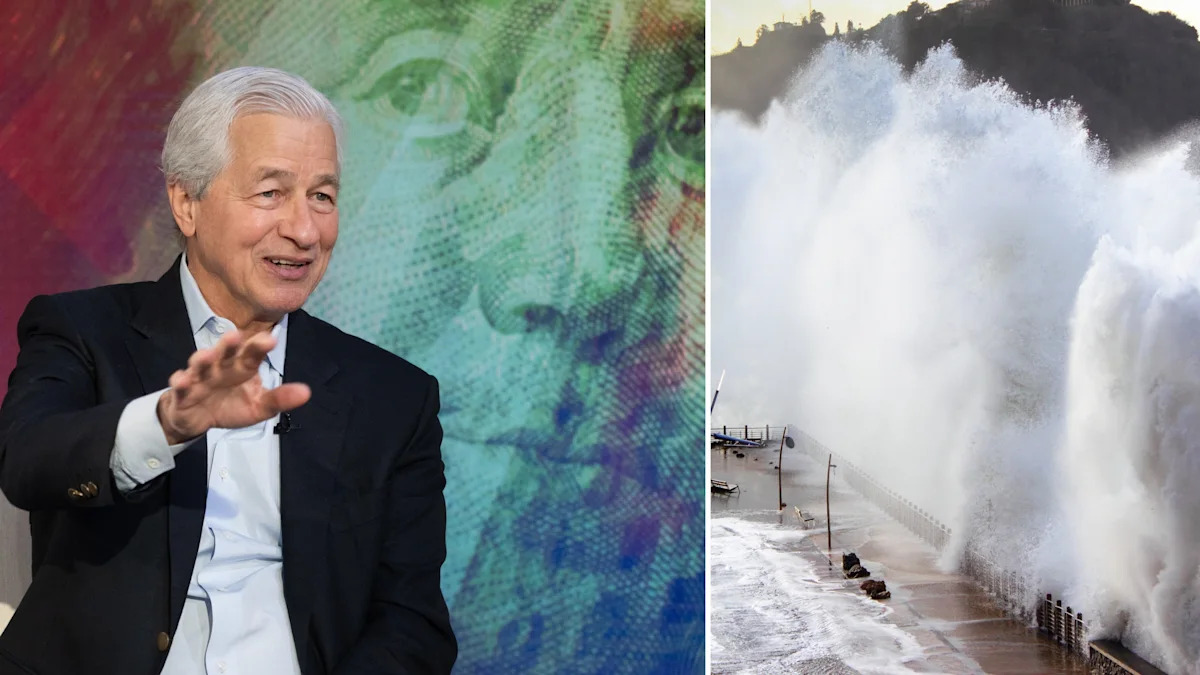
The JPMorgan Chase CEO says hes been caught off guard by Wall Streets complacency with global volatility.
Source: finance.yahoo.com

AI News Q&A (Free Content)
Q1: What factors does Jamie Dimon believe are contributing to the current bull market, and why does he describe it as a 'little tsunami'?
A1: Jamie Dimon attributes the current bull market to factors like low unemployment rates, significant capital spending in tech sectors, and deregulation that have strengthened Wall Street's balance sheets. He describes it as a 'little tsunami' due to its rapid and seemingly unstoppable rise, despite global geopolitical tensions. Dimon is particularly surprised that Wall Street remains complacent amidst conflicts involving Iran, Russia, and China, which have led to critical disruptions like the closure of the Strait of Hormuz affecting global commodity prices.
Q2: How does Jamie Dimon view the potential risks associated with the current market trends, and what historical financial events does he reference?
A2: Dimon sees high valuations and investor enthusiasm, particularly due to over $700 billion in AI spending, as potential risks leading to a market crash. He references past financial crises such as those in 1987 and 2008 to highlight the unpredictable nature of market cycles. Dimon warns that high asset prices increase systemic risk, although he admits uncertainty about what specific events might trigger a downturn.
Q3: What role does geopolitical tension play in Dimon's analysis of the market, and why is he concerned about Wall Street's reaction?
A3: Geopolitical tensions, particularly involving Iran, Russia, and China, are central to Dimon's concerns. The U.S. conflict with Iran, for example, has disrupted crucial oil and commodity transit routes, yet Wall Street's response has been surprisingly muted. Dimon is concerned that such complacency could lead to underestimating the potential for significant market disruptions.
Q4: In what ways does Jamie Dimon suggest the U.S. economy is insulated from global turmoil, and what are his concerns about this insulation?
A4: Dimon suggests that strong economic fundamentals, such as robust employment and corporate investment, have so far shielded the U.S. economy from global turmoil. However, he worries that this perceived insulation might lead to overconfidence among investors and policymakers, potentially masking underlying vulnerabilities that could precipitate a market correction.
Q5: What are the implications of Dimon's warnings for individual investors, particularly regarding asset prices and market cycles?
A5: Dimon's warnings imply that individual investors should remain cautious about high asset prices and be aware of the cyclical nature of markets. While current trends may seem favorable, Dimon suggests that they could abruptly reverse, and investors should be prepared for potential volatility. This means diversifying investments and considering defensive strategies to mitigate risk.
Q6: How has Wall Street's reaction to global events compared to Main Street's experience, according to Dimon?
A6: While Wall Street has largely brushed aside geopolitical tensions and continued its bullish trajectory, Main Street has faced challenges such as wage stagnation and rising commodity prices. Dimon highlights the disconnect between financial market optimism and the economic realities faced by everyday Americans, which could lead to broader economic disparities.
Q7: What historical context does the Charging Bull sculpture in New York provide in understanding financial optimism, and how does it relate to current market trends?
A7: The Charging Bull sculpture, created in response to the 1987 market crash, symbolizes financial optimism and resilience. Its presence in the Financial District reflects the enduring bullish sentiment on Wall Street, even amidst potential downturns. This historical context underscores the cyclical nature of markets and the persistent belief in recovery and growth, which parallels today's market dynamics as described by Dimon.
References:
- Page: Jamie Dimon