Summary
At a glance
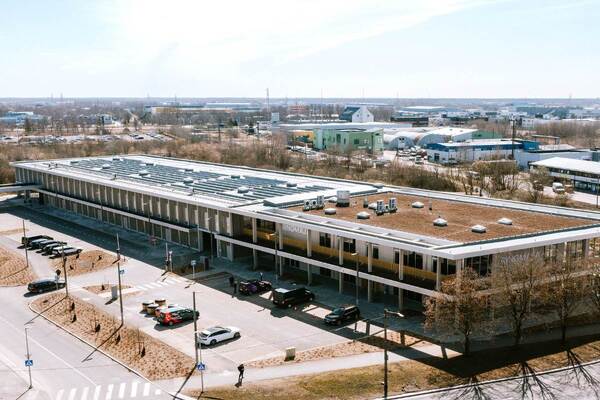
Who: City of Tallinn. What: The City has opened Estonias second circular economy centre. It combines a waste station, several repair workshops, a reuse room, a circular shop, classrooms, a circular caf, and a circular park of approximately 2.5 hectares under one roof. Why: To support …
Source: Smart Cities World

AI News Q&A (Free Content)
Q1: What is a circular economy, and what are its core principles?
A1: A circular economy is a resource production and consumption model that focuses on sharing, leasing, reusing, repairing, refurbishing, and recycling materials and products to extend their life cycle. The core principles include designing out waste and pollution, keeping products and materials in use, and regenerating natural systems. This model aims to tackle global challenges like climate change and waste management.
Q2: How does the implementation of circular economy principles affect global carbon emissions?
A2: Implementing circular economy strategies can significantly reduce global carbon emissions. It is estimated that global emissions could be reduced by 22.8 billion tons, equivalent to 39% of the emissions produced in 2019. In particular, strategies in sectors like cement, aluminum, steel, plastics, and food could reduce 9.3 billion metric tons of CO2 equivalent, which matches the current emissions from transportation.
Q3: What features does the new circular economy centre in Tallinn include?
A3: The circular economy centre in Tallinn includes a waste station, several repair workshops, a reuse room, a circular shop, classrooms, a circular café, and a circular park spanning approximately 2.5 hectares. These facilities aim to support and promote sustainable consumption and waste management practices.
Q4: How does a circular economy differ from a traditional linear economy?
A4: A circular economy contrasts with the traditional linear economy model, which follows a 'make, use, dispose' approach. In a circular economy, the focus is on maximizing the utility of resources throughout their life cycle and regenerating them in a cyclical pattern, thereby minimizing waste and environmental impact.
Q5: What role do business models play in the transition to a circular economy?
A5: Business models are crucial in transitioning from linear to circular processes. Models like product-as-a-service, sharing platforms, and product life extension are designed to optimize resource use, reduce waste, and create value for businesses and customers. These models support the adoption of circular economy principles by requiring fundamental redesigns of products, services, and channels towards long-life solutions.
Q6: Can you provide examples of circular economy strategies in specific sectors?
A6: Circular economy strategies can be effectively implemented in sectors such as cement, aluminum, steel, plastics, and food. These strategies include recycling materials, designing products for longer life cycles, and creating closed-loop systems that minimize waste and emissions. By focusing on these sectors, significant reductions in carbon emissions and resource consumption can be achieved.
Q7: What are the global benefits of adopting a circular economy?
A7: Globally, adopting a circular economy can lead to reduced carbon emissions, decreased raw material consumption, and increased sustainability of consumption. It can also open new market opportunities and combat global warming, contributing to long-term economic growth and environmental protection.
References:
- Circular economy - Wikipedia