Summary
April 22, 2026
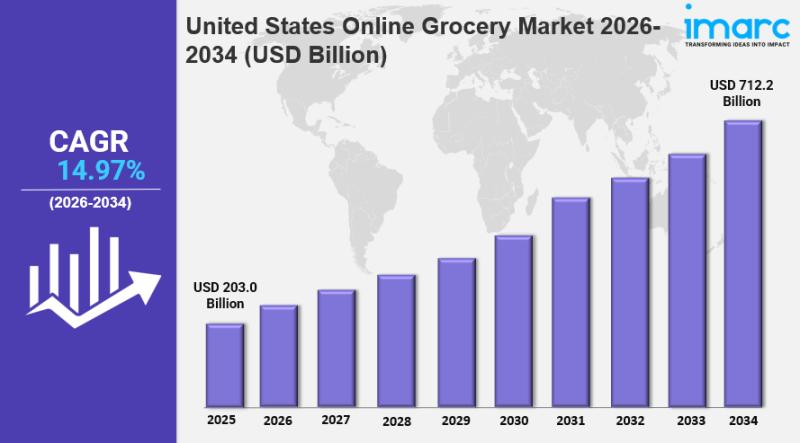
Online Grocery Set to Drive Majority of US Grocery Growth Through 2028
Online grocery shopping has firmly entered the mainstream, according to a new report from FMI The Food Industry Association and NielsenIQ, which positions e-commerce as a primary driver of future grocery growth…
Source: Seafoodnews

AI News Q&A (Free Content)
Q1: What are the main drivers for the growth of the online grocery market in the US through 2028?
A1: The main drivers for the growth of the online grocery market in the US include increasing consumer preference for convenience, technological advancements in online shopping platforms, and the expansion of delivery options such as drones and robots. The FMI and NielsenIQ report highlights that e-commerce will continue to be a primary driver of grocery growth, with a significant shift in consumer behavior towards online shopping post-pandemic.
Q2: How is consumer behavior changing with respect to online grocery shopping?
A2: Consumer behavior is rapidly changing with more people opting for online grocery shopping due to convenience, wider product selections, and better price comparisons. The COVID-19 pandemic has accelerated this shift, with many consumers continuing to favor online shopping platforms even as physical stores have reopened. The flexibility of ordering from various devices and the 24/7 availability of online stores also contribute to this trend.
Q3: What impact does online grocery shopping have on urban traffic and emissions?
A3: Online grocery shopping has significantly increased urban traffic congestion and emissions due to the high volume of deliveries. Research suggests that increasing consumer patience, even by a modest margin, can reduce delivery-related traffic and CO2 emissions. For instance, extending delivery windows by just five minutes can reduce daily delivery mileage by 30% and emissions by 20%.
Q4: What innovations are being introduced in the online grocery sector to support nutrition and sustainability?
A4: Innovations such as the Scale-Score label are being introduced to help consumers make informed decisions about nutrition and sustainability in online grocery shopping. This label combines nutritional and environmental information, aiming to highlight the benefits to both consumer health and environmental sustainability, although improvements are needed to enhance its efficacy in sustainability support.
Q5: How do search query variations affect e-commerce outcomes, particularly in grocery shopping?
A5: Search query variations can impact e-commerce outcomes by affecting how effectively consumers find products. A framework to recognize query equivalence can enhance search experiences and business outcomes by mapping queries to vector representations of search intent, thereby optimizing for user and business objectives. This approach leads to improved user experiences and business performance in the e-commerce domain.
Q6: What technological advancements are enhancing product classification in online grocery platforms?
A6: Technological advancements such as multimodal late fusion models are enhancing product classification in online grocery platforms. These models integrate text and image data to improve the accuracy of product categorization, leading to better searchability and recommendation systems. Such advancements support the efficient operation of large e-commerce platforms.
Q7: What are the potential societal benefits of increasing delivery times in online grocery shopping?
A7: Increasing delivery times in online grocery shopping can have significant societal benefits including reduced traffic congestion and lower emissions. By allowing for longer delivery windows, grocery services can optimize delivery routes, thus decreasing the environmental impact and contributing to urban sustainability efforts. These changes offer a balance between consumer convenience and societal welfare.
References:
- Online grocer
- Semantic Equivalence of e-Commerce Queries
- The Value of Patience in Online Grocery Shopping
- Scale-Score: Food Label to Support Nutritious and Sustainable Online Grocery Shopping
- A Multimodal Late Fusion Model for E-Commerce Product Classification