Summary
Animal model
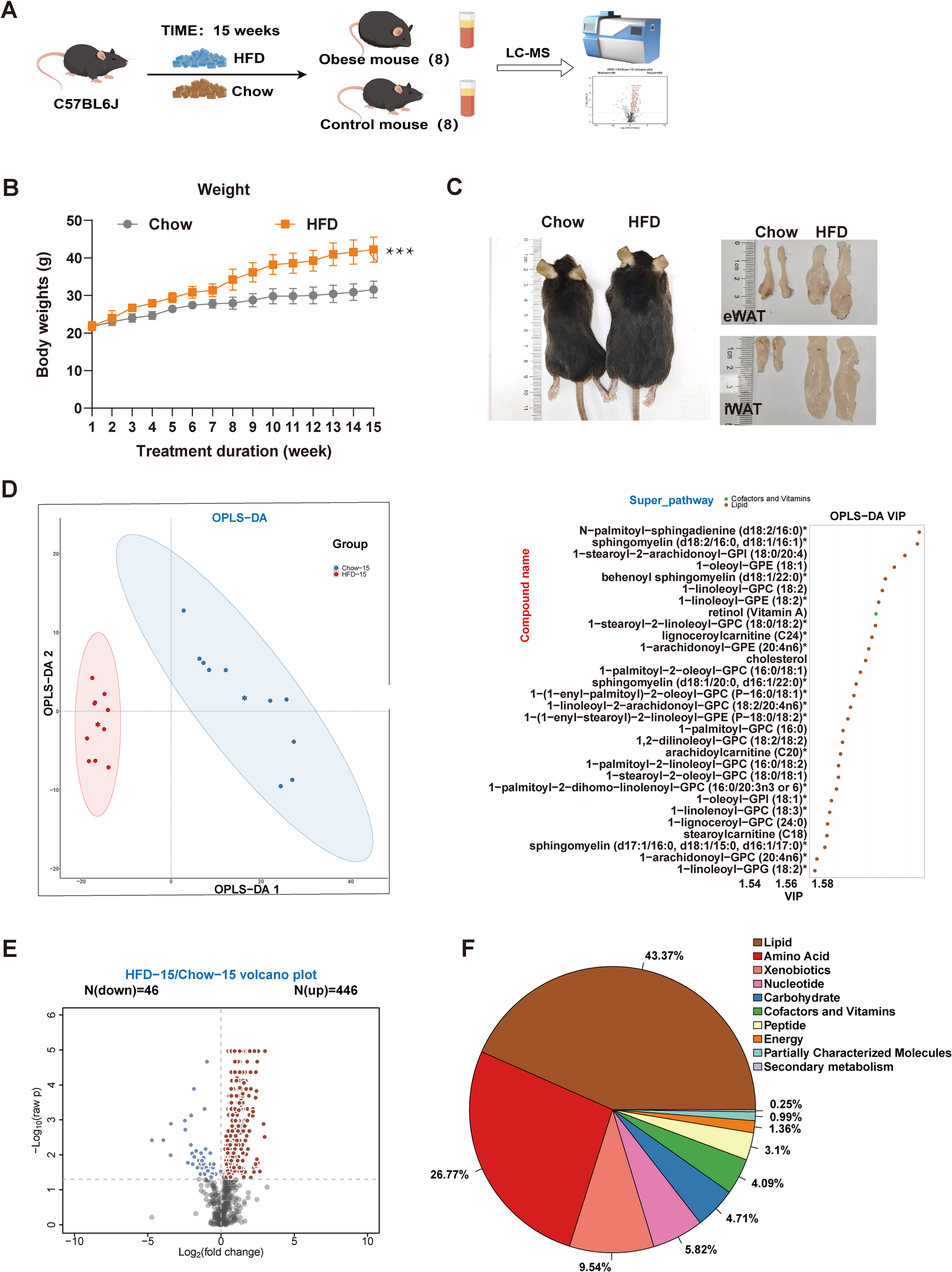
The Animal Ethics Committee at Shanghai Tongren Hospital (Reference number A2023-079-01, dated: 08/16/2024) obtained ethical approval for all animal experiments. 4 weeks old male C57BL/6 mice were obtained from Shanghai JieSiJie Laboratory Animal Co., Ltd (China) and maintained under c…
Source: Lipids in Health and Disease

AI News Q&A (Free Content)
Q1: What is imidazole propionate and how does it impact lipid metabolism?
A1: Imidazole propionate (ImP) is a microbial metabolite derived from histidine. It plays a significant role in regulating lipid metabolism, particularly under high-fat diet conditions. ImP has been shown to attenuate lipid accumulation by inhibiting key components of the peroxisome proliferator-activated receptor (PPAR) signaling pathway, such as FABP4, ACSL4, and CEBPα. This regulatory effect offers potential therapeutic benefits in preventing or treating obesity induced by high-fat diets.
Q2: How does the PPAR signaling pathway contribute to lipid metabolism?
A2: The PPAR signaling pathway is crucial in lipid metabolism. PPARs are nuclear receptors that regulate genes involved in adipogenesis, lipid metabolism, and glucose homeostasis. They balance nutrient metabolism and maintain metabolic flexibility, influencing lipid transport, binding, lipogenesis, and oxidation. The PPARα isoform is primarily involved in regulating fatty acid transport and oxidation, while PPARγ improves fatty acid uptake, storage, and lipogenesis, particularly in white adipose tissue.
Q3: What recent research highlights the role of imidazole propionate in obesity management?
A3: A recent study published in 2025 demonstrated that imidazole propionate could ameliorate lipid metabolism in adipocytes, thereby reducing high-fat diet-induced obesity. The research showed that ImP treatment significantly reduced lipid accumulation and inhibited the PPAR signaling pathway's activity, highlighting its potential as a therapeutic agent against obesity.
Q4: What are the key findings of the study on imidazole propionate and its effects on lipid metabolism?
A4: The study found that imidazole propionate significantly reduced lipid accumulation in zebrafish larvae and human adipocytes. It achieved this by suppressing key components of the PPAR signaling pathway, thus offering a potential strategy for managing high-fat diet-induced obesity. These findings underscore the role of gut-derived metabolites in metabolic health.
Q5: How does imidazole propionate connect to metabolic disorders like type 2 diabetes?
A5: Imidazole propionate has been linked to metabolic disorders such as type 2 diabetes. It affects insulin signaling and is elevated in individuals with type 2 diabetes. Research has indicated that ImP can act as a marker for obesity and is associated with an increased risk of developing metabolic disorders, emphasizing its importance in metabolic health research.
Q6: What role do PPARs play in immune function and lipid metabolism?
A6: PPARs are involved in regulating immune function through lipid metabolism in immune cells. In the immune system, PPARγ influences lipid metabolism and regulates processes such as antigen uptake and cytokine production. This regulation has implications for tumor-associated macrophages and other immune cells, affecting immune response and inflammation.
Q7: What are the potential therapeutic implications of targeting imidazole propionate and PPAR pathways in obesity?
A7: Targeting imidazole propionate and PPAR pathways offers promising therapeutic avenues for obesity management. By modulating these pathways, it is possible to reduce lipid accumulation and improve metabolic health. This approach could lead to novel treatments for obesity and related metabolic disorders, leveraging the regulatory capabilities of ImP and PPARs.
References:
- Imidazole propionate ameliorates lipid metabolism in adipocytes to attenuate high-fat diet-induced obesity via PPAR signaling pathway
- The PPARs are members of the nuclear receptor superfamily of ligand-inducible transcription factors
- Pathways-driven Sparse Regression Identifies Pathways and Genes Associated with High-density Lipoprotein Cholesterol in Two Asian Cohorts
- A Machine Learning Framework for Pathway-Driven Therapeutic Target Discovery in Metabolic Disorders
- Imidazol-4-one-5-propionic acid
- Histidine
- macrophages, T cells, and dendritic cells. Therefore, it is important to understand how PPARγ regulates immune function through lipid metabolism in immune cells