Summary
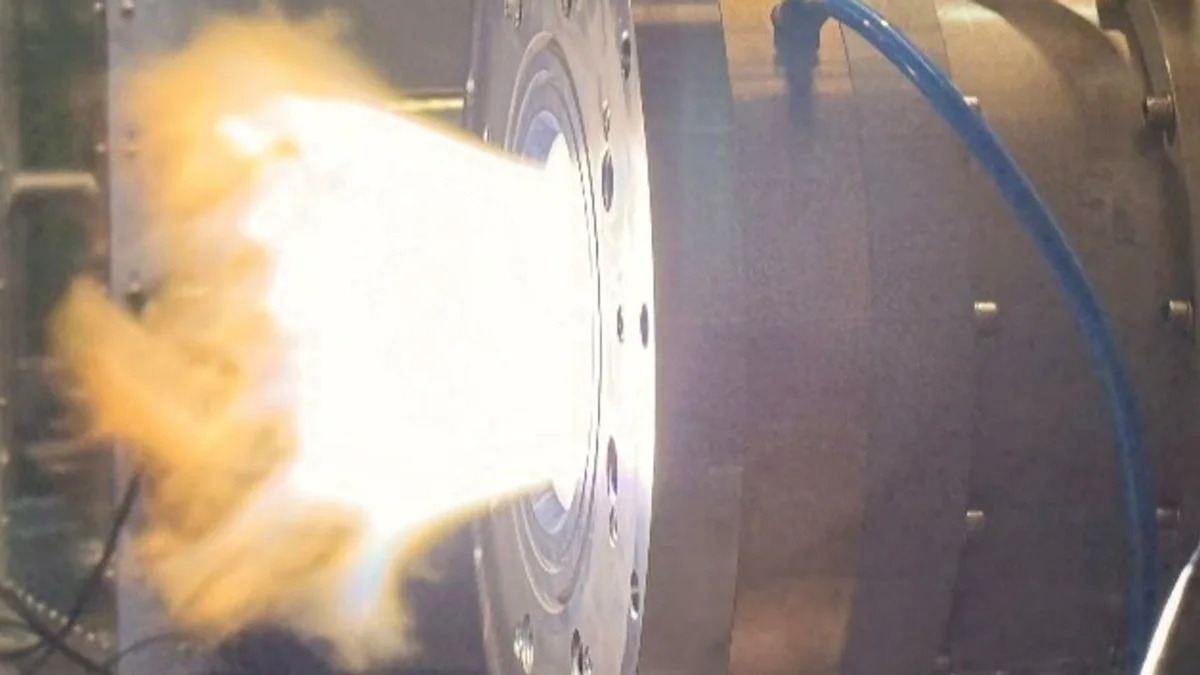
Graphene Manufacturing Group Ltd (TSX-V:GMG, OTCQX:GMGMF) has completed construction and started up its Generation 2.0 Graphene Manufacturing Technology Plant, …
Source: finance.yahoo.com

AI News Q&A (Free Content)
Q1: What is the significance of the Gen 2.0 Graphene Manufacturing Technology Plant by Graphene Manufacturing Group?
A1: The Gen 2.0 Graphene Manufacturing Technology Plant is significant because it represents a major advancement in the scale and efficiency of graphene production. This plant is designed to produce 10 tons of graphene per annum and is largely self-powered through renewable energy sources and hydrogen-enriched natural gas. This development not only boosts the production capacity but also aligns with sustainable practices by utilizing cleaner energy sources.
Q2: What are the future expansion plans of the Graphene Manufacturing Group following the Gen 2.0 project?
A2: Following the commissioning of the Gen 2.0 project, Graphene Manufacturing Group plans to replicate its production model globally. They aim to expand with additional production plants in North America and Australia, focusing on scaling output, diversifying production risk, and reducing operating costs by locating in regions with cheaper input costs, such as natural gas.
Q3: How does the Gen 2.0 Plant contribute to Graphene Manufacturing Group's global growth strategy?
A3: The Gen 2.0 Plant is a pivotal element in Graphene Manufacturing Group's global growth strategy. It marks the first step in their plan to expand production capabilities worldwide. By establishing more efficient and larger capacity production sites, GMG aims to meet increasing global demand and enhance its competitive position in the graphene market.
Q4: What challenges are associated with scaling up graphene production, and how does the Gen 2.0 Plant address them?
A4: Scaling up graphene production involves challenges such as maintaining cost-effectiveness and quality control. The Gen 2.0 Plant addresses these challenges by implementing advanced manufacturing technologies and energy-efficient solutions that reduce operational costs and environmental impact, thus ensuring a sustainable approach to large-scale graphene production.
Q5: What are the potential applications of graphene that could benefit from increased production capacity?
A5: Graphene's potential applications include lightweight and flexible electronic circuits, solar cells, and enhancements in medical, chemical, and industrial processes. The increased production capacity from the Gen 2.0 Plant could lead to cost reductions and broader commercial adoption of graphene-based technologies, facilitating advancements in these areas.
Q6: What are the environmental benefits of the Gen 2.0 Graphene Manufacturing Technology Plant?
A6: The environmental benefits of the Gen 2.0 Plant include its reliance on renewable energy and hydrogen-enriched natural gas, which significantly reduce carbon emissions compared to traditional energy sources. This approach supports sustainability goals by minimizing the carbon footprint associated with graphene production.
Q7: How has the discovery and development of graphene evolved, leading to the current advancements like the Gen 2.0 Plant?
A7: The discovery of graphene began with theoretical work in 1947 and tangible isolation in 2004 by Geim and Novoselov, who later won a Nobel Prize for their work. Since then, efforts have focused on improving production techniques to facilitate commercial applications. The Gen 2.0 Plant represents the culmination of these efforts by providing a scalable and economically viable method for large-scale graphene production.