Summary
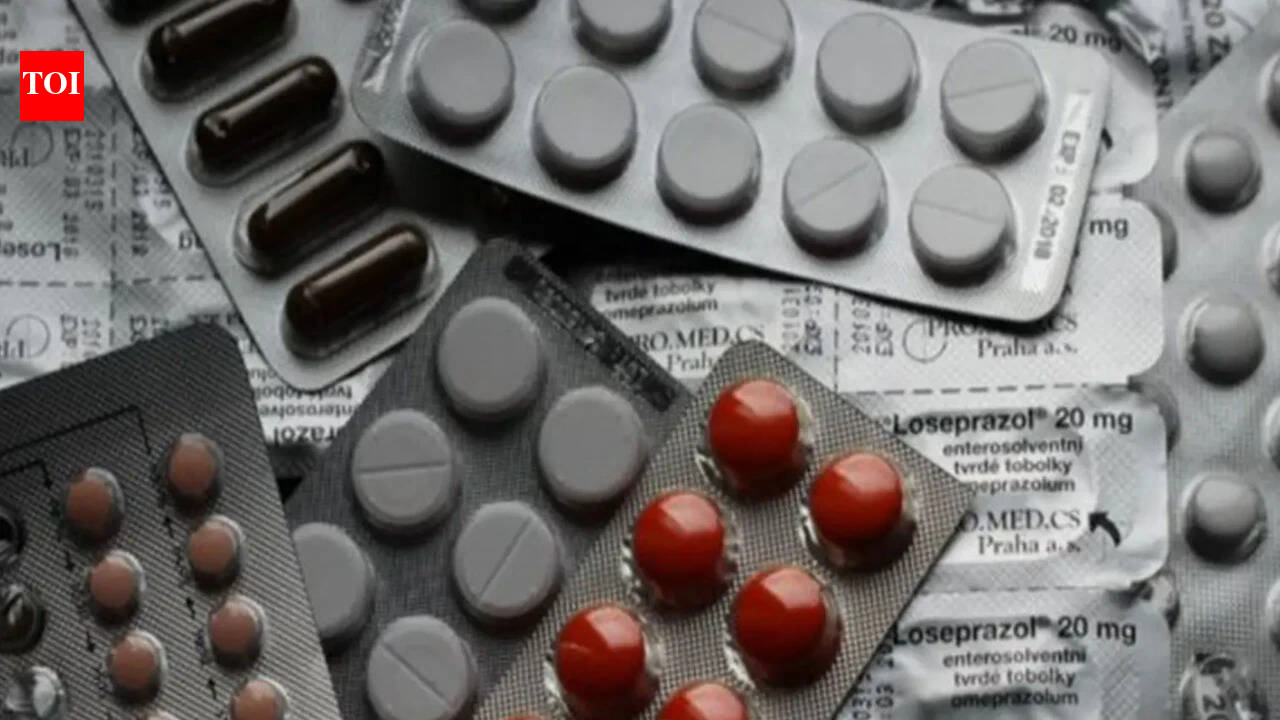
India News: NEW DELHI: Citizens will now be able to check the prices of medicines and lodge complaints related to drug pricing through a single government platf…
Source: timesofindia.indiatimes.com

AI News Q&A (Free Content)
Q1: What is the significance of the new single citizen platform for drug pricing in India?
A1: The new single citizen platform for drug pricing in India is significant as it consolidates various portals into one, allowing citizens to check medicine prices and lodge complaints regarding drug pricing more efficiently. This move aims to streamline processes, enhance transparency, and improve accessibility for consumers, potentially leading to better regulation of drug prices and ensuring affordability of medicines.
Q2: How does the National Pharmaceutical Pricing Authority (NPPA) regulate drug prices in India?
A2: The NPPA regulates drug prices in India by fixing and revising the prices of controlled bulk drugs and formulations. It also monitors the prices of decontrolled drugs to keep them at reasonable levels. The organization ensures that manufacturers do not overcharge consumers and enforces compliance with the Drugs (Prices Control) Order.
Q3: What are the recent developments in drug discovery as per the latest scholarly research?
A3: Recent developments in drug discovery include the use of RAG-enhanced collaborative LLM agents, which dynamically retrieve and contextualize information from biomedical knowledge bases. This approach addresses the challenges of data heterogeneity and ambiguity in drug discovery tasks, outperforming traditional deep learning methods by integrating diverse sources of scientific data.
Q4: What role does the Pradhan Mantri Bhartiya Janaushadhi Pariyojana play in drug pricing?
A4: The Pradhan Mantri Bhartiya Janaushadhi Pariyojana plays a crucial role in drug pricing by providing quality generic medicines at affordable prices. It aims to make healthcare more accessible by setting up centers that supply generic drugs, which are as effective as branded drugs but significantly cheaper, thereby helping to reduce the overall cost of healthcare in India.
Q5: What are the penalties for overcharging on drug prices in India?
A5: In India, if a manufacturer sells a medicine at a price higher than the approved or fixed price, they face prosecution under the Essential Commodities Act and are liable to deposit the overcharged amount with the government. This regulation is enforced to ensure that medicines remain affordable for all citizens.
Q6: How does the Pharma Sahi Daam app benefit consumers in India?
A6: The Pharma Sahi Daam app benefits consumers by allowing them to verify medicine MRPs, view alternative brands, and lodge price-related complaints directly with the NPPA. This app enhances consumer empowerment by providing a user-friendly interface to access drug pricing information and address grievances efficiently.
Q7: What are some challenges in drug pricing that scholarly articles have identified?
A7: Scholarly articles have identified challenges in drug pricing such as the complex and costly nature of drug development, regulatory hurdles, and the need for collaborative approaches to integrate vast amounts of scientific data. These challenges necessitate innovative solutions like the use of advanced computational models and collaborative frameworks to ensure fair pricing and accessibility.
References:
- Medication - Wikipedia
- Pradhan Mantri Bharatiya Janaushadhi Pariyojana - Wikipedia
- National Pharmaceutical Pricing Authority of India
- NPPA Central Government Portal
- RAG-Enhanced Collaborative LLM Agents for Drug Discovery
- Option Pricing via Multi-path Autoregressive Monte Carlo Approach - Arxiv
- On the Pricing of Storable Commodities - Arxiv