Summary
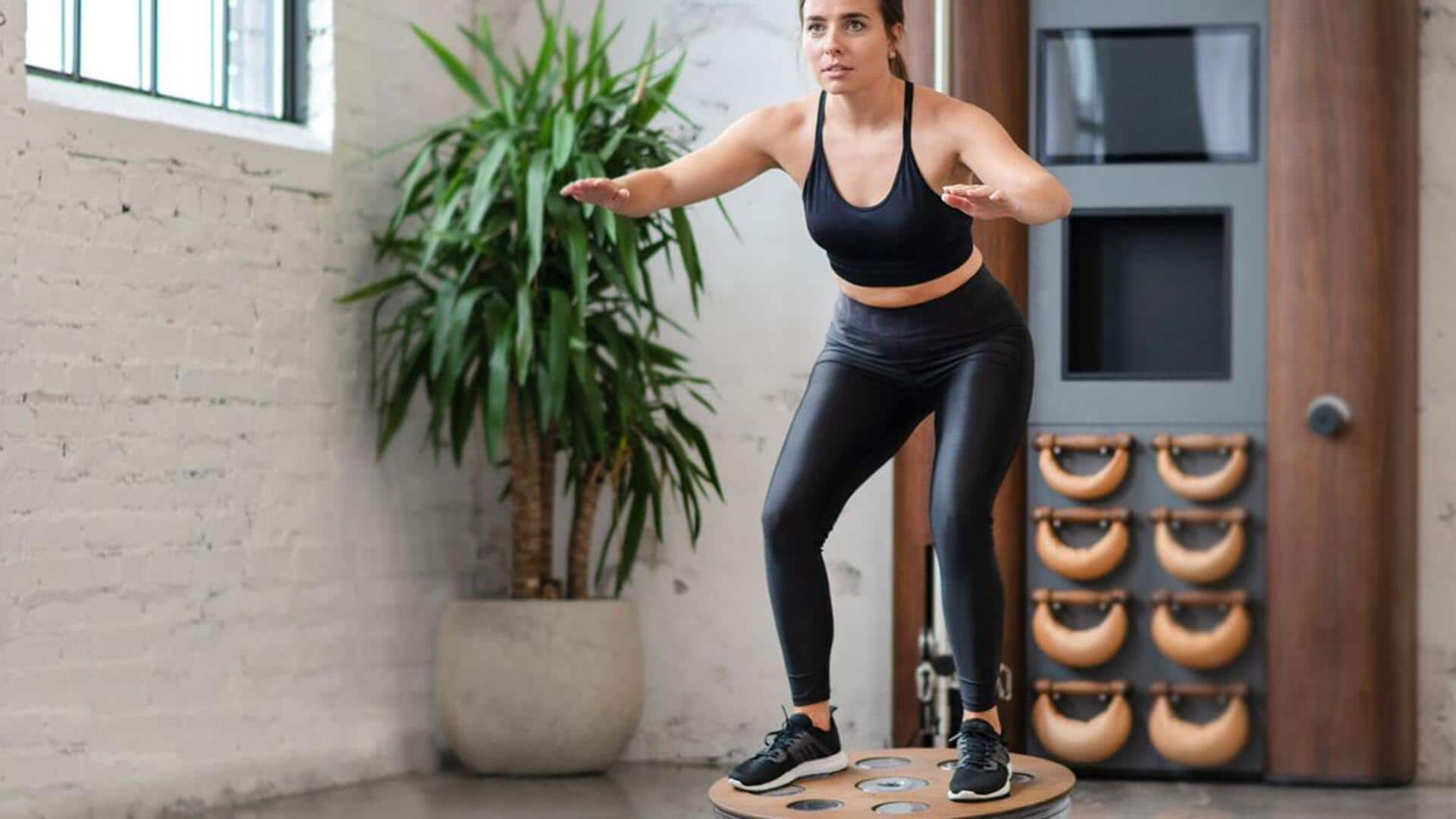
Balance board training is becoming increasingly popular as a versatile fitness tool that can be used for a number of exercises.
Source: Newsbytes

AI News Q&A (Free Content)
Q1: What are the fundamental benefits of balance board training in enhancing fitness?
A1: Balance board training is an effective fitness tool that improves core strength, stability, balance, and coordination. It engages multiple muscle groups simultaneously, offering a comprehensive workout that contributes to overall physical fitness. By challenging the user's balance, it enhances proprioception, which is the body's ability to perceive its position in space, thereby reducing the risk of injuries.
Q2: How does balance board training contribute to rehabilitation and therapy?
A2: Balance board training is widely used in rehabilitation and physical therapy due to its low-impact nature, making it suitable for individuals recovering from injuries. It helps in regaining strength, improving joint stability, and enhancing motor skills. The controlled instability of the board aids in re-establishing neuromuscular control and improving functional movement patterns.
Q3: What does recent scientific research indicate about the effectiveness of balance board training in sports performance?
A3: Recent studies have shown that balance board training significantly enhances athletic performance by improving balance and proprioceptive abilities, which are crucial for sports that require agility and quick reflexes. Athletes who regularly incorporate balance board exercises into their training routines tend to have better postural control and reduced injury rates.
Q4: Are there specific types of balance boards designed for different fitness levels and goals?
A4: Yes, there are various types of balance boards, such as wobble boards, rocker boards, and roller boards, each offering different levels of difficulty and targeting specific fitness goals. Beginners may start with a rocker board for basic balance improvement, while advanced users might prefer a roller board for more complex movements and greater instability.
Q5: What role does balance board training play in enhancing cognitive functions?
A5: Balance board training not only benefits physical fitness but also stimulates brain function. It requires concentration and coordination, which can enhance cognitive abilities such as attention, memory, and spatial awareness. This dual engagement of body and mind makes balance board exercises particularly effective for overall mental agility.
Q6: How does balance board training impact the prevention of falls in elderly populations?
A6: Balance board exercises are highly beneficial for elderly individuals as they help improve balance and stability, which are critical factors in fall prevention. Regular practice on a balance board can enhance muscle strength, coordination, and joint flexibility, thereby reducing the likelihood of falls and associated injuries in older adults.
Q7: What are the latest developments in balance board design to enhance user experience?
A7: Recent advancements in balance board design include the integration of digital technology, such as sensors and apps, which provide real-time feedback and training programs. These innovations enhance the user experience by allowing for personalized workouts, tracking progress, and providing motivational data, thereby making balance board training more engaging and effective.
References:
- Balance board - https://en.wikipedia.org/wiki/Balance_board
- The relationship between the number of editorial board members and the scientific output of universities in the chemistry field - https://arxiv.org/abs/1710.02596
- General Board Game Playing for Education and Research in Generic AI Game Learning - https://arxiv.org/abs/1907.01111
- Investigations on the energy balance in TDCB tests - https://arxiv.org/abs/1603.01421