Summary
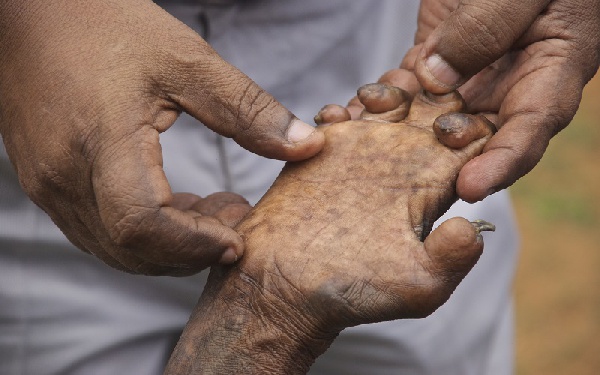
play videoLeprosy can take up to a decade before someone shows symptoms Leprosy, also known as Hansens disease, is a chronic bacterial infection that primarily affects the skin, nerves, and peripheral parts of the body such as the hands, feet, and face. Despite being an ancient disease, it remains present in Ghana, with 231 cases […]The post What you need to know about Hansens disease (Leprosy) appeared first on Ghanamma.com.
Source: Ghanamma

AI News Q&A (Free Content)
Q1: What is Hansen's disease, and how does it affect the human body?
A1: Hansen's disease, also known as leprosy, is a chronic bacterial infection caused by Mycobacterium leprae or Mycobacterium lepromatosis. It primarily targets the skin, peripheral nerves, respiratory tract, and eyes, leading to damage that may result in the loss of sensation or extreme physical deformities. If untreated, the disease can cause muscle weakness and loss of eyesight, with symptoms taking 1 to 20 years or more to manifest after infection.
Q2: How is leprosy diagnosed and treated?
A2: Leprosy is diagnosed by identifying acid-fast bacilli in a skin biopsy. Treatment involves multidrug therapy, typically using dapsone, rifampicin, and clofazimine. Paucibacillary leprosy requires six months of treatment, while multibacillary leprosy requires 12 months. These treatments are available for free from the World Health Organization.
Q3: What is the current prevalence of leprosy worldwide, and which regions are most affected?
A3: As of 2020, there are fewer than 200,000 cases of leprosy globally, significantly down from 5.2 million in the 1980s. Most new cases emerge in 14 countries, with India accounting for over half. Despite the reduced prevalence, leprosy remains a public health concern in specific areas.
Q4: What are the social implications of leprosy, and how does stigma impact its treatment?
A4: Leprosy has historically been associated with significant social stigma, which persists today as a barrier to early detection and treatment. Stigmatization can deter individuals from seeking medical help, thereby delaying diagnosis and treatment, and worsening health outcomes.
Q5: What challenges exist in diagnosing leprosy, as highlighted by recent case reports?
A5: Recent case reports, such as one on cutaneous leishmaniasis mimicking leprosy, highlight diagnostic challenges. These challenges can complicate the identification of leprosy, especially in cases where symptoms are similar to other dermatological conditions, necessitating precise diagnostic procedures and careful clinical evaluation.
Q6: What are some of the misconceptions about the transmission of leprosy?
A6: Leprosy is often mistakenly believed to be highly contagious, but it requires prolonged close contact for transmission, typically through respiratory droplets. Genetic factors and immune function also play roles in susceptibility. It is not transmitted through casual contact, during pregnancy, or through sexual contact.
Q7: What efforts are being made globally to combat leprosy, and what has been achieved in recent decades?
A7: Global efforts, led by organizations like the World Health Organization, have significantly reduced leprosy cases from 5.2 million in the 1980s to fewer than 200,000 in 2020. Over 16 million people have been cured in the past two decades. Ongoing initiatives focus on early detection, treatment accessibility, and stigma reduction.
References:
- Wikipedia: Leprosy
- Pubmed: A case report: Cutaneous leishmaniasis mimicking leprosy in an immunocompetent young adult: A diagnostic and therapeutic challenge in the Old World.