Summary
To read this full article you need to be subscribed to Institutional Investing in Infrastructure
by Chris Anderson
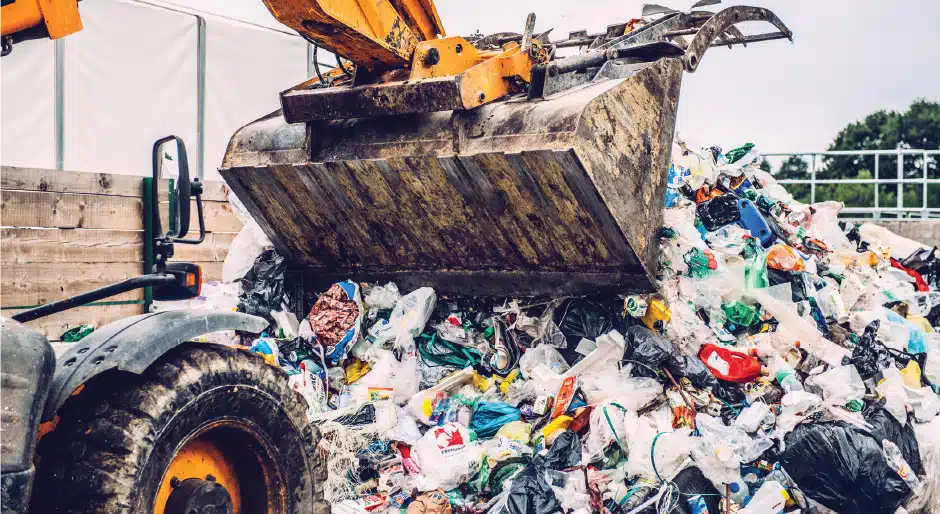
For decades, waste sat on the periphery of infrastructure investing: necessary but unremarkable, operationally complex, and often associated with environmental liability rather than o…
Source: Institutional Real Estate, Inc.

AI News Q&A (Free Content)
Q1: What is the main objective of a circular economy, and how does it differ from a traditional linear economy?
A1: The circular economy aims to extend the lifecycle of products by sharing, leasing, reusing, repairing, refurbishing, and recycling existing materials. This model contrasts with the traditional linear economy, which follows a 'take, make, dispose' approach. The circular model focuses on designing out waste and pollution, keeping products and materials in use, and regenerating natural systems, thus addressing global challenges like climate change and resource scarcity.
Q2: How is the circular economy impacting global emissions, and what are the potential reductions?
A2: Implementing circular economy strategies in sectors like cement, aluminum, steel, plastics, and food can potentially reduce global emissions by 9.3 billion metric tons of CO2 equivalent. This reduction is comparable to all current emissions from transportation, showcasing the significant environmental impact of shifting towards circular economic practices.
Q3: What role does waste infrastructure play in the circular economy, and why is it considered strategically important?
A3: Waste infrastructure is vital in the circular economy as it enables the reuse, recycling, and recovery of waste, contributing to resource efficiency. It plays a crucial role in reducing the consumption of raw materials and minimizing waste. The strategic importance lies in its ability to support sustainability goals, reduce pollution, and integrate innovative waste management practices.
Q4: What are some innovative technologies being researched to enhance waste management in a circular economy?
A4: Recent research has explored the use of artificial intelligence in waste detection and classification, achieving up to 70% precision in detecting waste and 75% accuracy in classification. This technology supports efficient recycling processes by categorizing waste into different types, such as bio, glass, metal, and plastic, which enhances the overall waste management system in a circular economy.
Q5: How can intelligent metamaterials contribute to the circular economy?
A5: Intelligent metamaterials, which can adjust their properties via software commands, can help design products that adhere to circular economy principles. These materials mitigate resource waste by optimizing designs and reducing inefficiencies. Their ability to control electromagnetic, acoustic, and mechanical properties allows for innovative applications in product design, potentially revolutionizing how resources are utilized.
Q6: What are the challenges facing the implementation of circular economy practices in waste infrastructure?
A6: Challenges include the need for significant investments in waste treatment infrastructure, such as facilities for collection, sorting, treatment, recovery, and disposal. Many regions lack adequate infrastructure, leading to inefficiencies in resource recovery and waste management. Overcoming these barriers is crucial for improving resource efficiency and achieving sustainability goals.
Q7: How are waste management companies positioned to benefit from the transition to a circular economy?
A7: Waste management companies, with their vertically integrated business models, are well-positioned to capitalize on the shift towards a circular economy. By focusing on recycling, repair, redesign, and reuse, these companies can reduce raw material use and waste creation, aligning with global sustainability efforts and enhancing their market opportunities.
References:
- Circular Economy on Wikipedia: https://en.wikipedia.org/wiki/Circular_economy
- Global Infrastructure Hub on Circular Infrastructure: https://www.gihub.org/infrastructure-and-the-circular-economy/
- Brookfield Insights on Circular Economy and Infrastructure Investment: https://privatewealth.brookfield.com/insight/circular-economy-and-infrastructure-investment
- Waste detection in Pomerania: non-profit project for detecting waste in environment: 2021-05-12
- Towards a Circular Economy via Intelligent Metamaterials: 2018-07-16