Summary
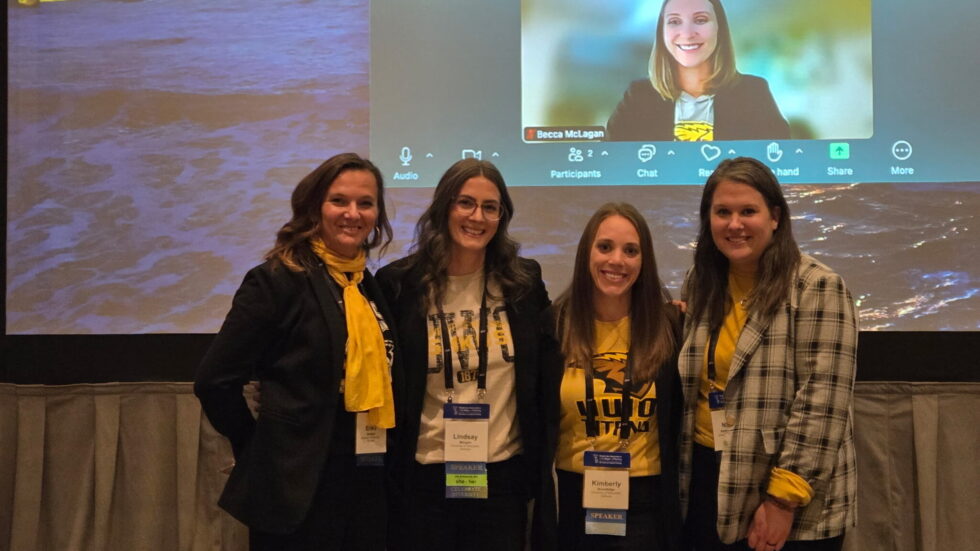
UWOshkoshs early, ethical and intentional approach to artificial intelligence is earning national recognition, as faculty and staff leaders shared the universitys work at two premier higher-education conferences in fall 2025.
Through UWOshkoshs established AI Trailblazers initiative, teams rep…
Source: Universities of Wisconsin

AI News Q&A (Free Content)
Q1: What is the AI Trailblazers initiative at UW-Oshkosh, and how has it gained national recognition?
A1: The AI Trailblazers initiative at UW-Oshkosh is a program that focuses on the ethical and intentional adoption of artificial intelligence in educational settings. This initiative has gained national recognition by being featured at two premier higher-education conferences, the EDUCAUSE Annual Conference and the AACN Transform. The program is noted for its values-driven AI adoption strategy, which aims to enhance teaching, learning, and student success through a practical AI Framework and Philosophy developed to guide classroom use of AI.
Q2: How does UW-Oshkosh's approach to AI in nursing education underscore ethical integration?
A2: UW-Oshkosh's approach to AI in nursing education is underscored by a framework that emphasizes ethical integration. At the AACN Transform 2025 conference, they presented a narrative on AI integration that highlighted a deliberately backwards-designed approach, showcasing responsible AI adoption in nursing simulations and education. This approach looks to navigate the future of AI in classrooms responsibly, promoting transparency and equity.
Q3: What are the potential ethical challenges of integrating AI into K-12 STEM education?
A3: Integrating AI into K-12 STEM education presents significant ethical challenges, including perpetuating algorithmic bias, eroding student privacy, and exacerbating educational inequities. The research suggests that while AI tools like Intelligent Tutoring Systems and predictive analytics can enhance learning, they also pose risks that require ethical scrutiny. Recommendations for addressing these challenges include mandatory bias audits and adapting strategies for low-resource settings to ensure equitable AI integration.
Q4: What are the key benefits and drawbacks of using AI in modern education according to recent studies?
A4: Recent studies indicate that AI in modern education offers benefits such as personalized learning, adaptive learning, and real-time feedback. However, drawbacks include the potential for surveillance risks, pedagogical limitations, and biases that can impact fairness and transparency. These findings underscore the need for reliable and accountable AI solutions that promote equal educational opportunities.
Q5: How has the University of Wisconsin-Oshkosh influenced other institutions regarding ethical AI integration?
A5: The University of Wisconsin-Oshkosh has influenced other institutions through its leadership in ethical AI integration, with its AI Trailblazers initiative being a model for responsible AI use. Institutions like the University of Michigan are looking to UWO for guidance on ethical AI integration, highlighting UWO's role in leading discussions on responsible innovation and ethical AI practices.
Q6: What are the components of a responsible AI integration framework in education?
A6: A responsible AI integration framework in education includes several components: ethical reasoning, technical AI literacy, equity-centered design, and policy alignment. It emphasizes the need for mandatory bias audits, low-resource adaptation strategies, and a tiered professional development model for educators. This framework aims to ensure AI serves as a tool for inclusive, human-centered education.
Q7: What insights did the EDUCAUSE Annual Conference provide about AI in educational settings?
A7: The EDUCAUSE Annual Conference provided insights into how AI can be ethically integrated into educational settings. UW-Oshkosh presented a session on using a framework and philosophy statement to guide AI use in classrooms, showcasing how AI can enhance teaching and learning while maintaining ethical standards. This approach aims to strengthen educational outcomes through responsible AI adoption practices.
References:
- UW-Oshkosh AI Trailblazers spotlight ethical program-aligned AI adoption at national conferences - Universities of Wisconsin
- Amplify IT 2025 – Artificial Intelligence: What’s Next in AI?
- Integration of AI in STEM Education, Addressing Ethical Challenges in K-12 Settings
- Published: 2025-10-22
- Title: Integration of AI in STEM Education, Addressing Ethical Challenges in K-12 Settings
- Authors: Shaouna Shoaib Lodhi, Shoaib Lodhi
- Need of AI in Modern Education: in the Eyes of Explainable AI (xAI)
- Published: 2025-01-02
- Title: Need of AI in Modern Education: in the Eyes of Explainable AI (xAI)
- Authors: Supriya Manna, Niladri Sett