
Summary
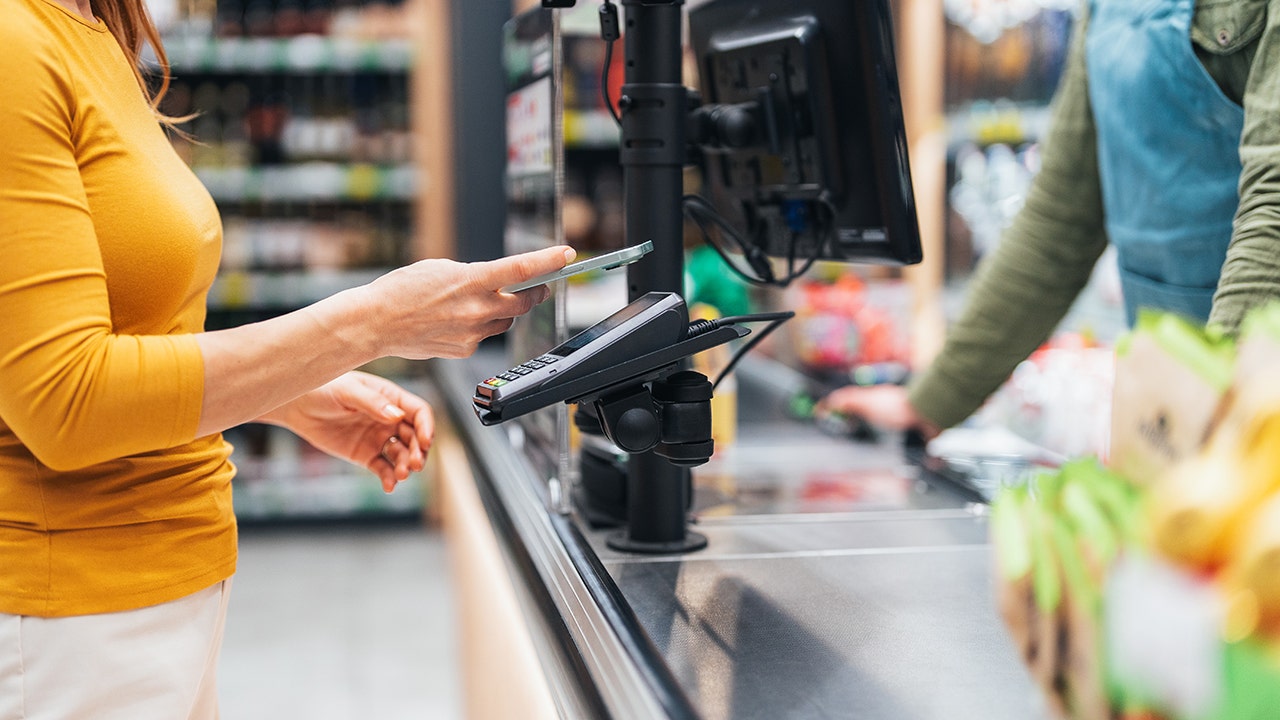
Uber launched Cart Assistant, an AI-powered feature designed to help users build grocery baskets faster in the Uber Eats app.
Source: theshelbyreport.com

AI News Q&A (Free Content)
Q1: What is the primary goal of Uber Eats' new AI-powered Cart Assistant?
A1: The primary goal of Uber Eats' AI-powered Cart Assistant is to help users build grocery baskets faster and more efficiently within the Uber Eats app. This innovation aims to streamline the online grocery shopping experience by leveraging artificial intelligence to recommend items and manage shopping lists.
Q2: How does AI play a role in enhancing user experience in online grocery shopping according to recent studies?
A2: AI enhances user experience in online grocery shopping by generating tailored content and synthesizing information to meet user needs. Recent studies highlight the role of generative AI models, which are trained on large datasets, to produce high-quality, human-like responses. This allows for more relevant and immediate outputs, improving the overall shopping experience by integrating and reorganizing existing information effectively.
Q3: What societal impacts have been observed due to the rise in online grocery shopping during the COVID-19 pandemic?
A3: The rise in online grocery shopping during the COVID-19 pandemic has led to increased urban traffic congestion, emissions, and pollution. While these services offer convenience, they also contribute to societal costs. Studies suggest that adjusting delivery times, or enhancing customer patience, can mitigate these negative impacts by balancing convenience with environmental considerations.
Q4: What are the potential challenges faced by AI systems in the context of grocery shopping?
A4: AI systems in grocery shopping face challenges such as ensuring precision in product recommendations, avoiding model hallucination where the AI generates incorrect or misleading information, and integrating diverse data sources to provide accurate and useful shopping suggestions. Addressing these challenges is crucial for enhancing the reliability and acceptance of AI-powered shopping assistants.
Q5: How does Uber Eats' Cart Assistant align with current trends in retail technology?
A5: Uber Eats' Cart Assistant aligns with current trends in retail technology by integrating AI to personalize and streamline the shopping experience. This mirrors a broader shift towards using AI to enhance customer interactions, optimize supply chains, and manage inventory more effectively, ultimately aiming to increase efficiency and customer satisfaction in the retail sector.
Q6: What role does customer patience play in the context of online grocery delivery according to recent research?
A6: Customer patience, or willingness to accept longer delivery times, plays a significant role in reducing traffic congestion and environmental impact associated with online grocery delivery. Recent research indicates a convex relationship between patience and traffic congestion, suggesting that even slight extensions in delivery times can significantly alleviate urban traffic and pollution.
Q7: What ethical considerations are associated with the deployment of AI in grocery shopping?
A7: The deployment of AI in grocery shopping raises ethical considerations such as data privacy, algorithmic transparency, and the potential for bias in AI recommendations. Ensuring that AI systems are aligned with ethical standards, particularly regarding data usage and customer consent, is essential for maintaining trust and integrity in AI-driven retail solutions.
References:
- Foundations of GenIR: https://arxiv.org/abs/2025.01021
- The Value of Patience in Online Grocery Shopping: https://arxiv.org/abs/2025.01021