
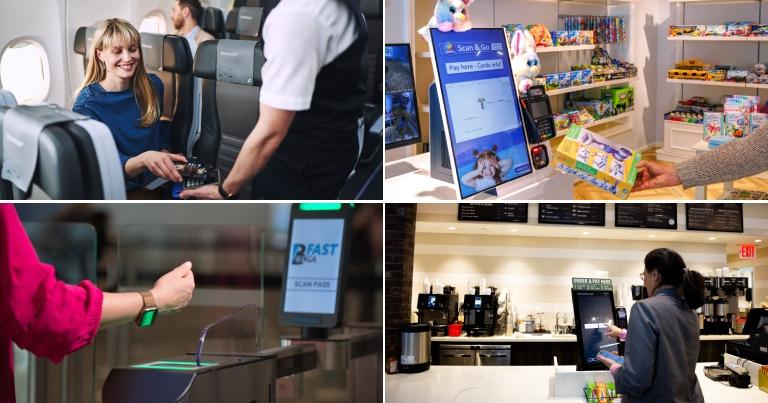
Summary
Vantage Group, Iberia, Threedot, MUC and Icelandair share their insights into the trends shaping ancillary & retailing strategies in 2026.
Source: futuretravelexperience.com

AI News Q&A (Free Content)
Q1: How is AI expected to transform ancillary services in the airline industry by 2026?
A1: AI is set to revolutionize ancillary services by enabling airlines to offer personalized, data-driven retail experiences. This transformation will allow airlines to move away from static ancillary menus to adaptive retail experiences, leveraging passenger profiles, route contexts, and real-time behavior data. This approach helps in reducing customer fatigue from excessive promotions, ensuring offers are more relevant and timely, which could significantly increase conversion rates and ancillary revenues.
Q2: What role does hyper-personalization play in the future of airline retailing as discussed by industry leaders?
A2: Hyper-personalization in airline retailing involves using real-time data and AI to tailor offers to individual passenger needs. Industry leaders like Iberia emphasize that this approach will enable airlines to create seamless omnichannel platforms that offer unique, experience-driven environments. By balancing digital convenience with emotional connections, airlines aim to enhance customer satisfaction and loyalty while boosting revenue.
Q3: What are the key trends highlighted by Vantage Group for airport commercial strategies in 2026?
A3: Vantage Group highlights several trends for 2026, focusing on creating holistic, personalized ecosystems that enhance the guest experience while driving sustainable revenue growth. They emphasize the importance of experience-led design, simplified commerce architecture, and intelligent personalization. Airports that adopt these strategies are expected to achieve stronger commercial outcomes and build greater trust and loyalty among travelers.
Q4: How does the integration of AI-driven personalization impact the traditional airline revenue model?
A4: AI-driven personalization shifts the traditional airline revenue model from merely expanding product catalogs to prioritizing the relevance of offers. By dynamically bundling and unbundling services such as seats, baggage, and in-flight services, airlines can better match offers to passengers' needs, increasing revenue without overwhelming customers. This approach reduces friction and enhances the passenger experience, leading to higher conversion rates.
Q5: What insights do the latest scholarly articles provide on the ethical implications of AI in airline retailing?
A5: Recent scholarly articles, such as the case study on OpenAI, explore the ethical implications of AI in various industries, including airline retailing. The focus is on ensuring that AI systems align with ethical guidelines, emphasizing 'safety' and 'risk' discourses. These studies highlight the need for transparency and governance to prevent ethics-washing practices and ensure AI systems are used responsibly in enhancing retail experiences.
Q6: What are the challenges faced by airlines in implementing data-driven retail strategies?
A6: Airlines face challenges such as balancing the breadth of their product offerings with the risk of customer fatigue from excessive notifications. Ensuring data privacy and security, integrating disparate data systems, and developing AI algorithms that can accurately predict and respond to passenger needs are also significant hurdles. Successfully addressing these challenges requires a strategic focus on creating seamless, personalized experiences that enhance customer satisfaction.
Q7: How does Icelandair utilize its geographical position to enhance its business strategy?
A7: Icelandair leverages its geographical position to offer one-stop transatlantic flights, which is a central pillar of its business strategy. This strategic positioning allows the airline to efficiently connect various destinations across the Atlantic, providing convenient travel options for passengers while maximizing route efficiency and profitability. Icelandair's hub at Keflavík International Airport supports this strategy by facilitating international travel.