Summary
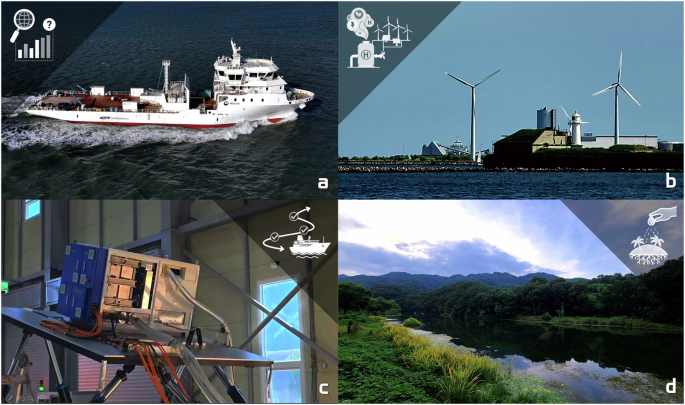
For the maritime sector, the postponement of the adoption of the Net Zero Framework has renewed attention to four structural issues that will determine the frameworks effectiveness (Fig. 1). First, additional technical work is required to establish robust default values for well-to-tank emissions a…
Source: Nature

AI News Q&A (Free Content)
Q1: What is the significance of the Initial IMO Strategy on the reduction of GHG emissions from ships?
A1: The Initial IMO Strategy is crucial as it aims to reduce greenhouse gas emissions from international maritime shipping, which accounts for about 3% of total global GHG emissions. The strategy envisions the elimination of these emissions within the century, although many advocate for decarbonization by 2050. This strategy is not legally binding but suggests measures for member states, promoting cooperation where more developed countries can support those less able to adapt.
Q2: How does the Science Based Targets initiative (SBTi) contribute to the Net Zero Framework?
A2: The Science Based Targets initiative (SBTi) collaborates with organizations like the UN Global Compact and the WWF to validate science-based climate targets, with over 10,000 companies committed by 2025. It supports the Net Zero Framework by providing a structured approach for companies to set and achieve targets that align with global climate goals, thus integrating maritime sector efforts into broader climate commitments.
Q3: What new technological developments are influencing maritime training according to recent scholarly articles?
A3: Recent developments include an AI-driven framework that enhances maritime training through objective assessments of trainee performance. This framework uses AI techniques to track visual focus, recognize speech, and detect stress, achieving high accuracy in these areas. Such technology provides detailed insights into trainee readiness for high-risk scenarios, offering personalized feedback and improving safety performance at sea.
Q4: What are the structural issues highlighted in achieving the effectiveness of the Net Zero Framework in the maritime sector?
A4: The postponement of adopting the Net Zero Framework has highlighted four structural issues: the need for robust default values for emissions, the development of new technologies, the creation of supportive policies, and the alignment of international regulations. Addressing these issues is essential for the framework's effectiveness in reducing the maritime sector's carbon footprint.
Q5: What role does synthetic data generation play in maritime object detection models?
A5: Synthetic data generation is vital for enhancing object detection models' robustness in the maritime domain. It addresses the challenge of obtaining diverse real image datasets by creating high-quality training data for adverse and low-probability conditions. This approach improves detection accuracy, essential for safe maritime operations in challenging environments.
Q6: How does the Port State Control system contribute to anti-corruption efforts in the maritime industry?
A6: The Port State Control system enforces regulations on ship operators to ensure international standards compliance, reducing corruption by preventing operators from bypassing rules through 'flagging out'. It grants authority to officers for compliance checks, though historically, it has also led to corruption when officers demanded bribes. Efforts continue to refine this system to ensure integrity and compliance in maritime operations.
Q7: What future research directions does the MTReD dataset propose for maritime domain applications?
A7: The MTReD dataset proposes research directions in 3D scene reconstruction for maritime applications, focusing on geometrical consistency and visual completeness. It introduces new metrics for evaluating perception-based image completeness and suggests preprocessing methods to improve reconstruction accuracy. This dataset aims to stimulate further research in maritime navigation, segmentation, and localization tasks.
References:
- Science Based Targets initiative
- Initial IMO Strategy on the reduction of GHG emissions from ships
- MTReD: 3D Reconstruction Dataset for Fly-over Videos of Maritime Domain
- AI Meets Maritime Training: Precision Analytics for Enhanced Safety and Performance
- SafeSea: Synthetic Data Generation for Adverse & Low Probability Maritime Conditions