Summary
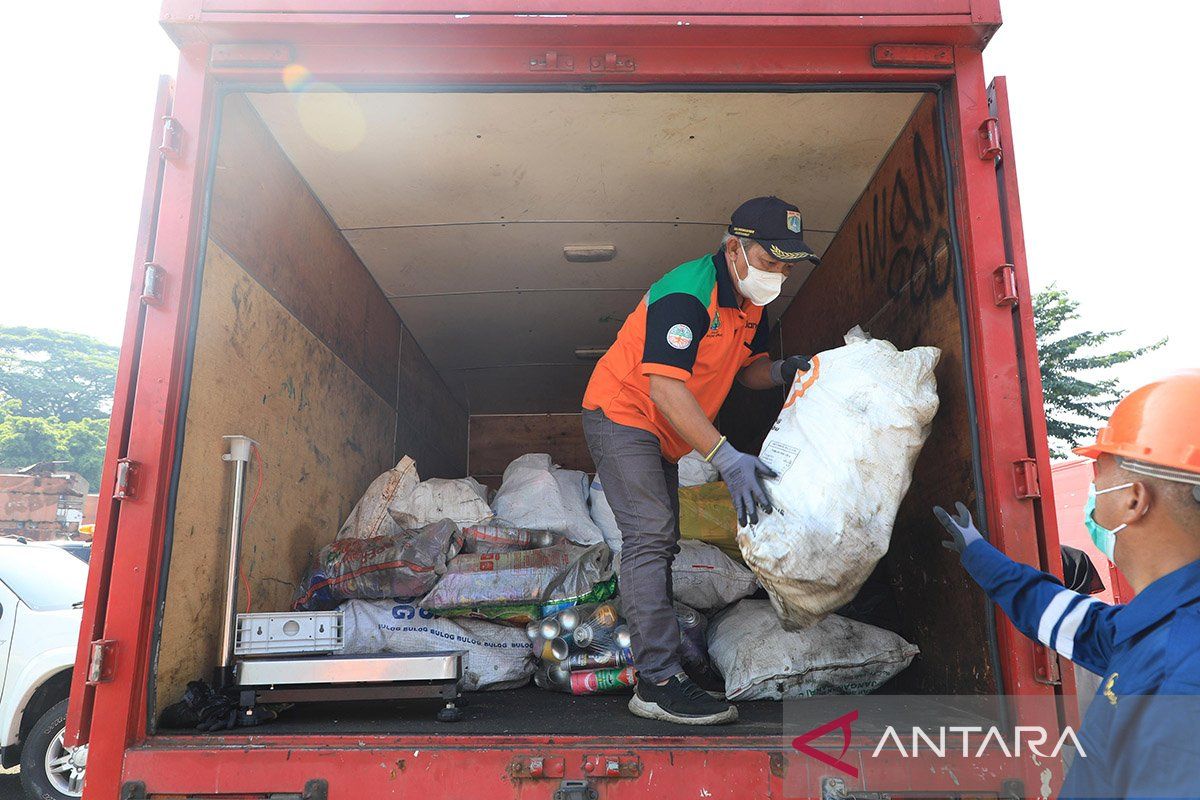
The Indonesian government is strengthening its commitment to a circular economy by implementing Extended Producer Responsibility (EPR), a policy that mandates ….
Source: en.antaranews.com

AI News Q&A (Free Content)
Q1: What role does the Extended Producer Responsibility (EPR) play in Indonesia’s circular economy initiative?
A1: The Extended Producer Responsibility (EPR) in Indonesia is a policy that mandates manufacturers and importers to be accountable for the entire lifecycle of their products and packaging. This includes collection, sorting, and recycling of leftover packaging materials. Enshrined in the 2008 Waste Management Law, EPR aims to reduce waste by encouraging recycling and the use of recyclable materials in production. It is a key component of Indonesia's strategy to promote a circular economy and mitigate environmental impact.
Q2: How has the concept of circular economy evolved in Indonesia's policy framework?
A2: Indonesia has integrated the circular economy concept into its National Long-Term Development Plan (RPJPN) 2025–2045 and the National Medium-Term Development Plan (RPJMN) 2025–2029. This approach is designed to transform the economy to be more sustainable by maximizing the use of raw materials and reducing waste. The government has been proactive in developing policies to support this transition, including regulations on green industry standards and waste reduction by producers.
Q3: What are some challenges faced by Indonesia in implementing EPR regulations for plastic waste?
A3: One of the significant challenges Indonesia faces in implementing EPR regulations for plastic waste is ensuring that producers using single-use plastics assume greater responsibility. The regulatory framework is still in development, with plans to mandate EPR systems for plastic waste by 2029. This requires substantial coordination among stakeholders to enforce reuse, recycling, and reduction strategies effectively.
Q4: How does the circular economy in Indonesia contribute to sustainable development goals (SDGs)?
A4: Indonesia's circular economy initiatives aim to address several SDGs by promoting sustainable practices across key sectors like food and beverages, textiles, and electronics. By implementing a circular economy, Indonesia expects to increase its GDP and create millions of green jobs. These efforts align with SDGs focused on responsible consumption and production, climate action, and economic growth.
Q5: What recent scholarly insights have been made regarding the integration of circular economy principles into software development?
A5: Recent studies propose incorporating circular economy principles into software development, particularly in network management logic. This involves using modular forms of network logic that mediate between end-user operations and network resources, thereby optimizing resource use and reducing waste. Such integration demonstrates that circular economy principles can extend beyond physical products to digital solutions, potentially enhancing sustainability in the software industry.
Q6: How are intelligent metasurfaces proposed to support circular economy principles?
A6: Intelligent metasurfaces, which can adjust their physical properties through software commands, are proposed to enhance product design efficiency, thus supporting circular economy principles. By reducing resource waste and optimizing design processes, these metasurfaces can help harmonize fast-paced product design with sustainability goals, mitigating inefficiencies and security concerns.
Q7: What economic impacts can be expected from Indonesia's transition to a circular economy?
A7: Indonesia's transition to a circular economy is projected to significantly boost its Gross Domestic Product by Rp. 593-638 trillion and generate approximately 4.4 million green jobs. This shift not only aims to transform the economic landscape but also supports environmental sustainability by reducing waste and promoting the use of renewable resources, aligning with broader economic transformation goals.
References:
- Towards a Circular Economy via Intelligent Metamaterials