Summary
19 Feb 2026
India unveils MANAV Vision as new global pathway for ethical AI
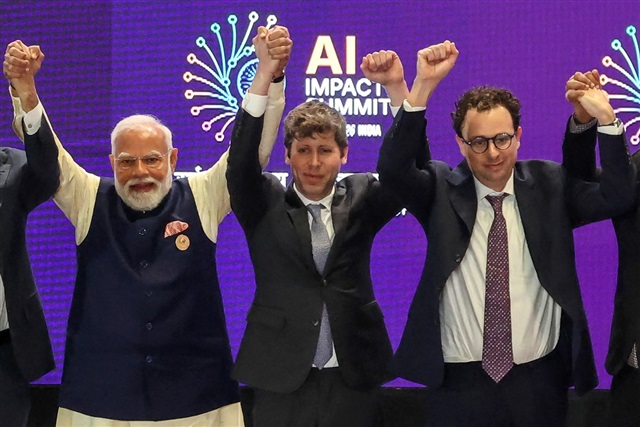
Narendra Modi presented the new MANAV Vision during the India AI Impact Summit 2026 in New Delhi, setting out a human-centred direction for AI.
He described the framework as rooted in moral guidance, transparent oversight…
Source: Digital Watch Observatory

AI News Q&A (Free Content)
Q1: What is the MANAV Vision unveiled by India in 2026, and what are its primary objectives?
A1: The MANAV Vision, introduced by India during the AI Impact Summit 2026, is a human-centered framework for ethical AI development. Its primary objectives include ensuring moral guidance and transparent oversight in AI technologies, aiming to balance technological advancement with ethical considerations.
Q2: How does the MANAV Vision compare to other global ethical AI initiatives?
A2: The MANAV Vision is part of a broader global effort to create ethical AI frameworks. It emphasizes human-centered principles, similar to initiatives by OpenAI and other organizations that focus on safety and risk management. However, it uniquely integrates India's cultural and moral perspectives into its guidelines.
Q3: What are the key findings from the 'Competing Visions of Ethical AI' study regarding OpenAI's approach?
A3: The study on OpenAI reveals that its public discourse heavily focuses on safety and risk management. The research highlights that while OpenAI communicates extensively about ethical principles, it often lacks the application of academic ethics frameworks, suggesting a need for more practical governance measures.
Q4: What challenges do researchers face in applying ethical guidelines to AI, according to recent academic studies?
A4: Recent studies, such as 'Beyond principlism,' indicate that researchers struggle with the 'Triple-Too' problem: too many initiatives, abstract principles, and an overemphasis on risks. The lack of practical guidelines hampers effective ethical AI application in daily research practices.
Q5: How does brain-inspired AI introduce unique ethical challenges compared to traditional AI?
A5: Brain-inspired AI poses distinct ethical challenges by incorporating biological aspects, raising foundational issues not present in traditional AI. These include concerns over robustness and generalization capabilities, necessitating a heuristic method to address emerging ethical dilemmas.
Q6: What practical strategies are suggested for ethical AI use in research practices?
A6: In response to the gap between abstract principles and practical application, a user-centered, realism-inspired approach is suggested. This includes understanding user needs, context-specific guidance, and balancing ethical considerations with research utility and benefits.
Q7: How does the ethical AI discourse influence AI governance and industry practices?
A7: Ethical AI discourse significantly impacts governance by shaping policies and frameworks that guide industry practices. This discourse often highlights the need for transparency, accountability, and a balance between innovation and ethical standards, influencing both public perception and regulatory measures.
References:
- Competing Visions of Ethical AI: A Case Study of OpenAI
- A method for the ethical analysis of brain-inspired AI
- Beyond principlism: Practical strategies for ethical AI use in research practices