
Summary
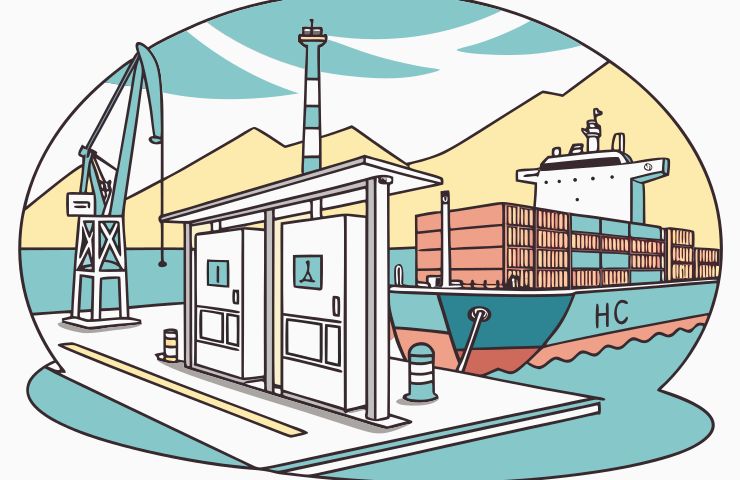
A coastal hub turned green tech frontier In the heart of the Ligurian coastline, the bustling port city of La Spezia is embracing a fresh wave of sustainable i
Source: hydrogenfuelnews.com

AI News Q&A (Free Content)
Q1: What recent milestone did the Port of La Spezia achieve in hydrogen bunkering?
A1: The Port of La Spezia recently completed its first hydrogen bunkering operation, marking Italy's pioneering effort in this field. The operation involved transferring hydrogen from a mobile land vehicle to a vessel at the Baglietto Shipyard using low-pressure metal hydride storage technology. This procedure was authorized by the Eastern Ligurian Sea Port Authority and followed a multi-phase safety protocol, demonstrating the feasibility of such operations in a working port environment.
Q2: How does maritime decarbonization contribute to environmental sustainability?
A2: Maritime decarbonization is crucial for reducing greenhouse gas emissions from the global maritime sector, aligning with the Paris Agreement's goals. By transitioning to low- and zero-emission fuels, the industry aims to achieve net-zero emissions by 2050. This includes adopting alternative fuels and technologies, enhancing operational efficiencies, and implementing international standards and policies to support these transitions, ultimately contributing to a sustainable and environmentally friendly maritime industry.
Q3: What innovative technologies are being utilized in maritime training to enhance safety and performance?
A3: AI-driven frameworks are being developed to objectively assess maritime training performance. These systems use visual focus tracking, speech recognition, and stress detection to provide insights into trainees' readiness for high-risk scenarios. Such technologies ensure maritime professionals receive precise feedback, enhancing their preparedness for real-world challenges while improving safety and performance across the maritime sector.
Q4: What challenges does the maritime industry face in achieving decarbonization?
A4: The maritime industry faces significant challenges in achieving decarbonization, primarily due to the slow pace of transitioning to carbon-neutral fuels. This transition requires substantial investments in infrastructure, technology, and policy changes. While goals are set for 2030 and 2040, achieving these targets necessitates overcoming technical, financial, and regulatory barriers, along with ensuring widespread adoption of sustainable practices and technologies.
Q5: What are the implications of the International Maritime Organization's (IMO) new regulations for the industry?
A5: The IMO's new regulations aim to significantly reduce greenhouse gas emissions by encouraging shipowners to adopt low-carbon fuels starting in 2028. These regulations include financial incentives and penalties to promote compliance, potentially transforming the competitive landscape for shipping companies. As a result, the industry must innovate and invest in cleaner technologies to meet these stringent environmental standards.
Q6: How does the use of metal hydride technology enhance hydrogen bunkering operations?
A6: Metal hydride technology enhances hydrogen bunkering operations by allowing hydrogen to be stored and transferred at low pressures, reducing safety risks. This technology is already used by the Italian Navy's submarines and has been implemented at the Baglietto Shipyard. It facilitates safe and efficient hydrogen transfer without requiring advanced temperature or flow rate controls, making it suitable for maritime applications.
Q7: What are the potential benefits of synthetic data generation for maritime conditions?
A7: Synthetic data generation for adverse maritime conditions enhances the robustness of object detection models. It provides diverse datasets that are otherwise challenging to obtain, improving model accuracy and reliability. This approach supports training and testing in controlled environments, facilitating advancements in maritime navigation and safety technologies by simulating real-world scenarios and conditions.