Summary
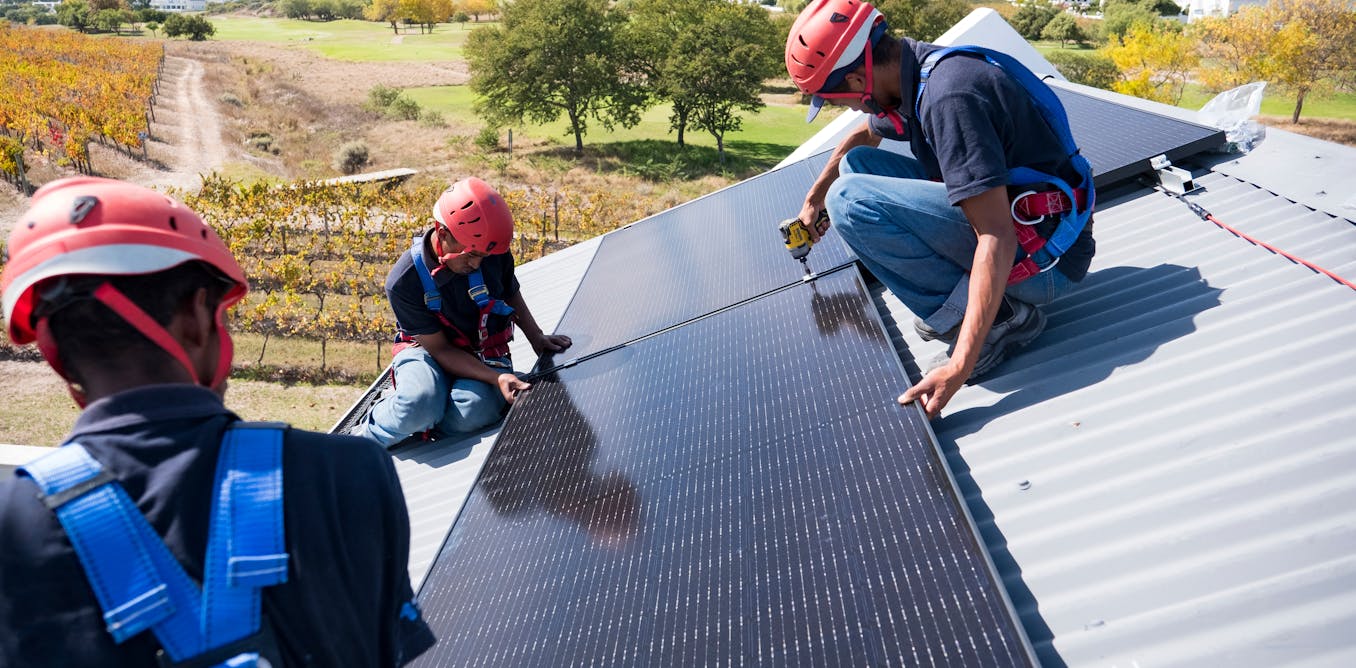
South African homes need two-way meters so that they can feed extra solar power from home systems and electric vehicles back to the grid.
Source: theconversation.com

AI News Q&A (Free Content)
Q1: What are the potential benefits of integrating home solar power systems and electric vehicles into South Africa's electricity grid?
A1: Integrating home solar power systems and electric vehicles into South Africa's electricity grid can significantly boost clean energy usage and strengthen the electricity system. Two-way meters allow homeowners to sell excess solar energy back to the grid, while vehicle-to-grid (V2G) technology enables electric vehicles to store and return energy to the grid. This integration can help South Africa reduce its carbon footprint, as the country is heavily reliant on coal for electricity, and facilitate a move towards renewable energy sources.
Q2: How does the use of two-way meters and V2G technology address the challenges faced by South Africa in adopting solar and electric vehicle technology?
A2: Two-way meters and V2G technology provide solutions to the high cost and limited adoption of solar and electric vehicle technology in South Africa. By enabling the sale of excess solar power and stored vehicle energy back to the grid, these technologies can reduce overall energy costs and provide financial incentives for adoption. This approach also addresses issues of grid reliability and energy demand, helping to stabilize the electricity system in the face of increased renewable energy integration.
Q3: What are the technical and regulatory challenges associated with integrating electric vehicles into the South African grid?
A3: The integration of electric vehicles into South Africa's grid faces technical challenges such as managing increased electricity demand and ensuring grid stability. Regulatory challenges include the need for a comprehensive framework to oversee the adoption of electric vehicles and to ensure compliance with grid standards. Lessons from the regulation of small-scale embedded generation systems can be applied to develop effective policies for electric vehicle integration.
Q4: What are the latest developments in Vehicle-to-Grid (V2G) technology, and how can they be applied in South Africa?
A4: V2G technology allows electric vehicles to act as small-scale grid batteries, storing energy and returning it to the grid when needed. Recent advancements have improved battery life and energy efficiency, making V2G a viable option for grid support. In South Africa, V2G can help balance energy demand, support renewable energy adoption, and reduce reliance on centralized power plants.
Q5: How does the adoption of off-grid electric vehicle charging stations benefit South Africa's energy infrastructure?
A5: Off-grid electric vehicle charging stations, powered by solar energy, offer a reliable alternative to South Africa's national grid, which suffers from frequent power outages. These stations can reduce the pressure on the national grid, provide a sustainable charging solution for electric vehicles, and support the country's transition to renewable energy sources by minimizing dependence on coal-fired power.
Q6: What role does smart grid technology play in facilitating the integration of home solar and electric vehicles into South Africa's grid?
A6: Smart grid technology is crucial for integrating home solar and electric vehicles into South Africa's grid by enhancing grid management and energy efficiency. It allows for real-time monitoring and control of energy flows, supports demand response services, and facilitates the incorporation of renewable energy sources. Smart grids can also improve grid resilience to cyber attacks and optimize energy distribution across the network.
Q7: What are the economic implications of integrating home solar and electric vehicle systems into the grid for South African households?
A7: Economic implications for South African households include potential cost savings from reduced electricity bills and financial incentives from selling excess energy back to the grid. The integration of these systems can also increase the value of residential properties. However, initial setup costs and the need for regulatory compliance may pose challenges. Overall, the transition can lead to long-term economic benefits and contribute to energy independence.