Summary
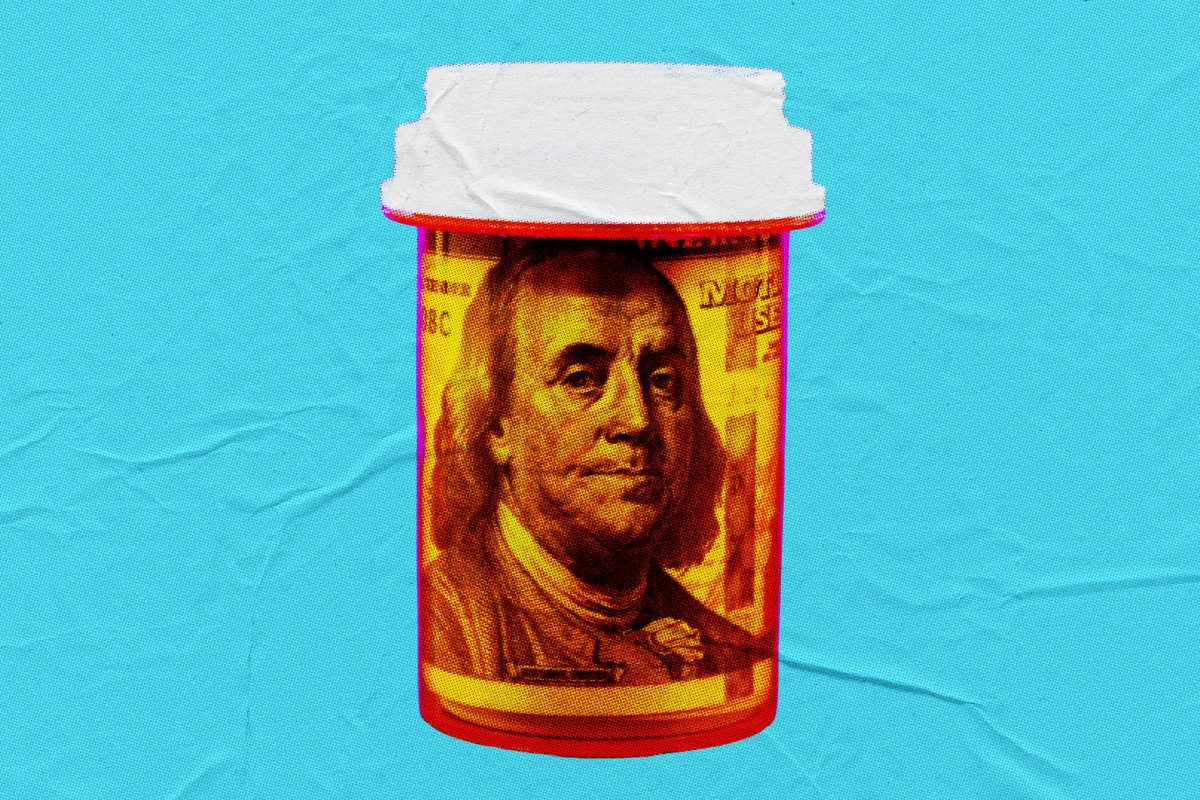
No AI-discovered drug has been approved. 40 million people use ChatGPT for health advice daily. A reality check on what AI can actually do in medicine.
Source: thenextweb.com

AI News Q&A (Free Content)
Q1: What are the current applications of AI in healthcare, and what ethical concerns do they raise?
A1: AI in healthcare is applied in areas like diagnostics, treatment protocol development, drug development, personalized medicine, and patient monitoring. Ethical concerns include data privacy, job automation, and algorithmic bias. Stakeholders such as health professionals and patients often doubt the empathetic capacity of AI in care. The scientific literature on AI in healthcare often suffers from a lack of reproducibility.
Q2: What challenges are faced by AI in drug discovery according to recent studies?
A2: Recent studies highlight challenges such as the need for costly domain-specific fine-tuning of AI models, data heterogeneity, and the integration of multi-source information. These challenges limit the application of general-purpose large language models (LLMs) in drug discovery tasks. New frameworks like CLADD and xImagand-DKI are being developed to address these issues by enhancing data retrieval and integration capabilities.
Q3: How does the CLADD framework aim to improve AI's role in drug discovery?
A3: The CLADD framework employs a retrieval-augmented generation (RAG) system tailored to drug discovery, which retrieves and contextualizes information from biomedical knowledge bases. It integrates relevant evidence dynamically, addressing challenges such as data heterogeneity and ambiguity without needing domain-specific fine-tuning. CLADD outperforms both general-purpose and domain-specific LLMs in various drug discovery tasks.
Q4: What is the significance of the xImagand-DKI model in overcoming data sparsity in drug discovery?
A4: The xImagand-DKI model addresses the issue of data overlap sparsity in drug discovery by generating synthetic pharmacokinetic and drug-target interaction data. It uses domain knowledge from molecular fingerprints and the Gene Ontology to enhance model performance. This model fills data gaps, potentially improving downstream research tasks like high-throughput screening and drug combination studies.
Q5: How is ChatGPT being explored for scientific discovery?
A5: ChatGPT is being used in a novel approach to scientific discovery by simulating the creation of improved models in a gamification environment. It combines concepts from AI and physics to create a new model, GPT$^4$, which can benchmark hypothetical physical theories. This use of AI demonstrates potential in hypothesis generation and model improvement.
Q6: What are the regulatory challenges surrounding AI in healthcare in the United States?
A6: In the United States, AI regulation is characterized by a patchwork of state laws, with 27 enacted AI laws across 14 states between 2023 and 2025. These laws address issues like algorithmic discrimination and transparency, but the lack of a comprehensive federal standard results in inconsistencies. National efforts to preempt state laws have been discussed but not yet implemented.
Q7: What potential does AI hold for personalized medicine, and what are the barriers to its implementation?
A7: AI holds significant potential for personalized medicine by enabling precise diagnostics and tailored treatment plans. However, barriers include ethical concerns, data privacy issues, and resistance from healthcare leaders. Additionally, the lack of reproducibility in scientific studies and the slow adoption of new technologies hinder widespread implementation.
References:
- Artificial intelligence in healthcare - Wikipedia
- RAG-Enhanced Collaborative LLM Agents for Drug Discovery
- Domain Knowledge Infused Conditional Generative Models for Accelerating Drug Discovery
- State AI laws in the United States - Wikipedia
- Towards The Ultimate Brain: Exploring Scientific Discovery with ChatGPT AI