Summary
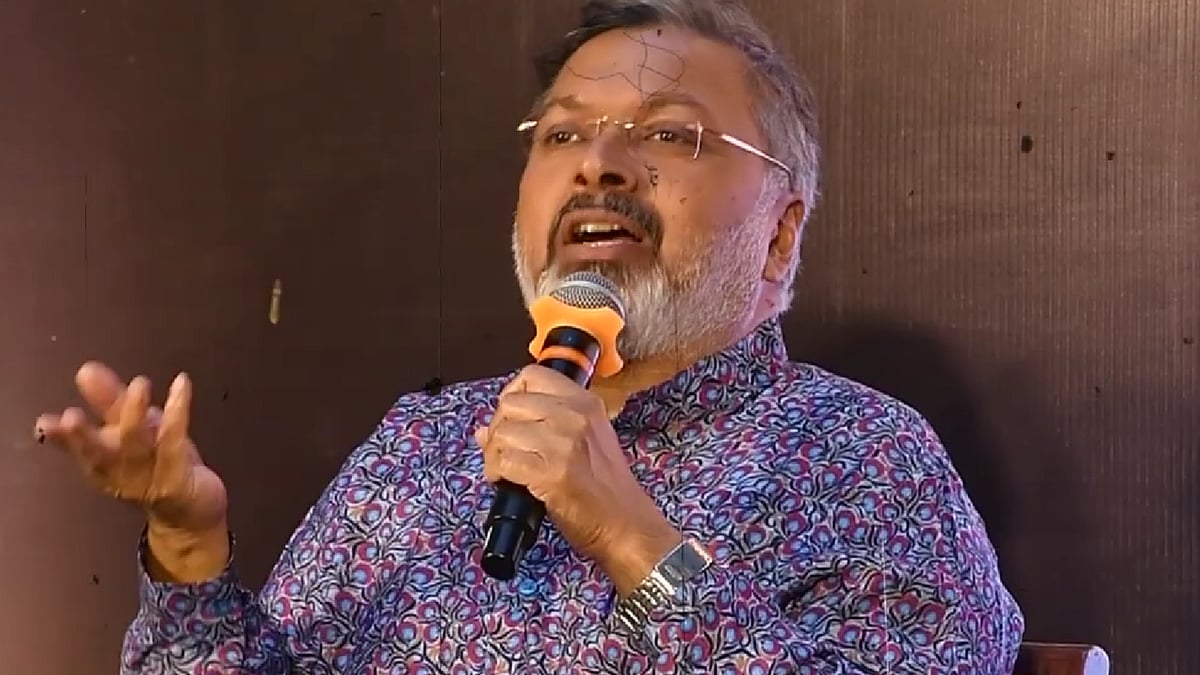
As mythologist Devdutt Patnaik explains, what we offer our gods reflects geography, history, occupation and community. From milk sweets in the north to coconut along the coast, fish for fishing communities and even alcohol in folk traditions the divine often mirrors the devotee. Mythology, like food, is living, adaptive and deeply human.
Source: The Free Press Journal

AI News Q&A (Free Content)
Q1: What does Devdutt Pattanaik explain about the relationship between offerings to gods and Indian culture?
A1: Devdutt Pattanaik explains that offerings to gods in India reflect the geography, history, occupation, and community of the devotees. For example, milk-based sweets are prevalent in northern India, while coastal areas might offer coconut, and fishing communities like the Kolis in Maharashtra may offer fish. Alcohol and non-vegetarian foods are offered in some folk traditions, which are rooted in rural and working-class cultures. These offerings highlight the adaptive and human nature of mythology and suggest that what people offer to their gods often says more about human societies than about divinity itself.
Q2: How has alcohol been integrated into religious practices in India, according to cultural histories?
A2: Alcohol has been a part of Indian religious practices for centuries. Historical records from the Indus Valley civilization show that fermentation vessels were used for brewing and distilling grains, fruits, and flowers. The Rigveda mentions Soma, a fermented drink with divine properties, used in religious ceremonies. Different cultural influences introduced various alcoholic beverages, and certain Hindu Tantric groups have used alcohol in sacred rituals. This integration reflects a complex relationship where alcohol is used both as an offering to deities and in personal consumption during special rituals.
Q3: What recent scholarly insights have been made about cultural transmission and its relation to plant-based diets?
A3: Recent scholarly insights, such as those from the study 'Learning Robust Real-Time Cultural Transmission without Human Data,' emphasize that cultural transmission is a domain-general social skill that allows for the inheritance of cultural evolution. This process expands our skills, tools, and knowledge, including dietary practices like plant-based diets. The study highlights that real-time cultural transmission can occur without pre-collected human data, suggesting that cultural evolution, including dietary shifts, can be algorithmically developed, thereby influencing contemporary dietary practices.
Q4: How does the historical context of alcohol offerings in India compare with its modern consumption trends?
A4: Historically, alcohol offerings in India have been part of religious and cultural rituals, as seen with the use of Soma in Vedic ceremonies and Mahua in tribal rituals. In modern times, India's alcohol market is expanding, with a significant increase in consumption projected from 5 billion liters in 2020 to 6.21 billion liters in 2024. This reflects a shift from ritualistic use to broader social and economic consumption, influenced by globalization and changing cultural norms.
Q5: What are the cultural implications of offering plant-based items to gods in India?
A5: Offering plant-based items to gods in India reflects a cultural alignment between faith and lifestyle, especially among vegetarian trading communities. This practice highlights a historical continuity where dietary habits are mirrored in religious offerings. It underscores a broader cultural narrative where food is not just sustenance but a representation of identity, memory, and devotion, often shaped by the geographical and historical context of the community.
Q6: What recent developments have been made in understanding the evolutionary models of culture change, particularly in dietary practices?
A6: The 'Extended Evolutionary Synthesis Facilitates Evolutionary Models of Culture Change' paper discusses recent developments in understanding culture change through evolutionary models. It highlights non-Darwinian processes like self-organization and epigenetic change, which are crucial in understanding how dietary practices, such as plant-based diets, evolve culturally. These insights emphasize the dynamic nature of cultural adaptation and the role of cumulative cultural evolution in shaping dietary norms.
Q7: How does the concept of 'food as truth' manifest in the offerings to Hindu gods?
A7: The concept of 'food as truth' in Hindu offerings is explored by Devdutt Pattanaik, who notes that food offerings are deeply symbolic and reflect the complex interplay of cultural, historical, and spiritual influences. Each god has specific food preferences, like Ganesha's fondness for sugarcane and Krishna's for butter. These offerings are not merely ritualistic but serve as a metaphor for deeper philosophical truths and cultural identities, illustrating how food transcends its physical form to become a medium of cultural expression and spiritual connection.