Summary
Systems Art describes artists from Hans Haacke, Trevor Paglen, and Refik Adanol to Cameron Rowland, Agnieszka Kurant, and David L. Johnson
Source: artnews.com

AI News Q&A (Free Content)
Q1: What are the main characteristics of Systems Art, and how did it originate?
A1: Systems Art is influenced by cybernetics and systems theory, focusing on natural systems, social systems, and the art world's social signs. It originated during the 1960s and 1970s as part of the conceptual art movement. This art movement incorporates elements like structure, function, behavior, and interconnectivity, often overlapping with movements such as the anti-form movement and cybernetic art.
Q2: How does the work of Hans Haacke contribute to Systems Art?
A2: Hans Haacke is a prominent figure in Systems Art, known for his work that critiques social and political systems. His art often involves real-time systems, such as physical processes or data-driven installations, to highlight and question the structures and functions of the systems he examines.
Q3: What role does artificial intelligence play in contemporary art, particularly in the context of Systems Art?
A3: Artificial intelligence in contemporary art, particularly in Systems Art, involves using AI programs to generate or enhance visual art. AI art raises philosophical questions about human-AI collaboration and the nature of art. The AI boom of the 2020s, with tools like Midjourney and DALL-E, has made it easier for artists to create imagery, though it also raises issues of copyright and impact on traditional artists.
Q4: How has Trevor Paglen integrated technology into his Systems Art practice?
A4: Trevor Paglen integrates technology into his Systems Art by exploring themes of surveillance, data collection, and the unseen infrastructures of the digital age. His work often includes photographic and video projects that reveal hidden aspects of technology and its impact on society, challenging viewers to reconsider the systems that govern modern life.
Q5: What are some challenges faced by artists like Refik Anadol in using AI for art creation?
A5: Artists like Refik Anadol face challenges such as navigating copyright issues, as AI-generated art raises questions about authorship and ownership. Additionally, there are concerns about technological unemployment and the potential for AI to replace traditional artistic roles. The complexity of AI systems also requires artists to have a multidisciplinary understanding of technology and art.
Q6: How do artists like Cameron Rowland and Agnieszka Kurant use Systems Art to address social issues?
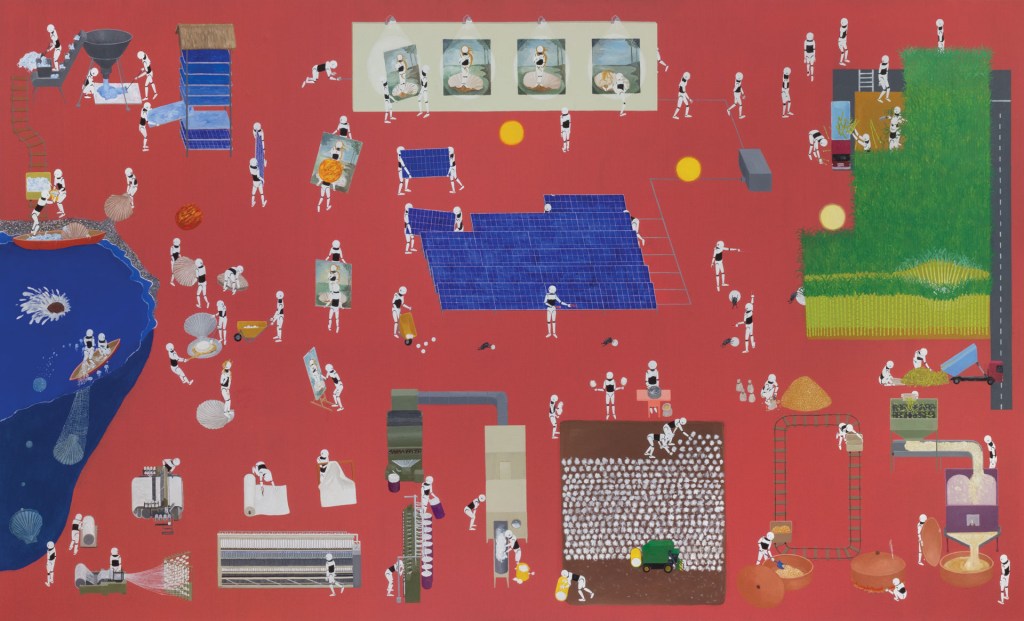
A6: Cameron Rowland and Agnieszka Kurant use Systems Art to explore and critique socio-economic structures. Rowland's work often focuses on systems of leasing and ownership, highlighting issues of economic and social injustice. Kurant's art investigates collective intelligence and the invisible economy, questioning how value and labor are assigned in contemporary society.
Q7: What impact does AI art have on traditional art forms and artists?
A7: AI art impacts traditional art forms by introducing new methods of creation and altering perceptions of authorship and creativity. It presents challenges such as potential technological unemployment for artists and raises debates about the essence of creativity. However, it also opens opportunities for innovation by blending human and machine creativity to produce unique art forms.
References:
- Systems art