Summary
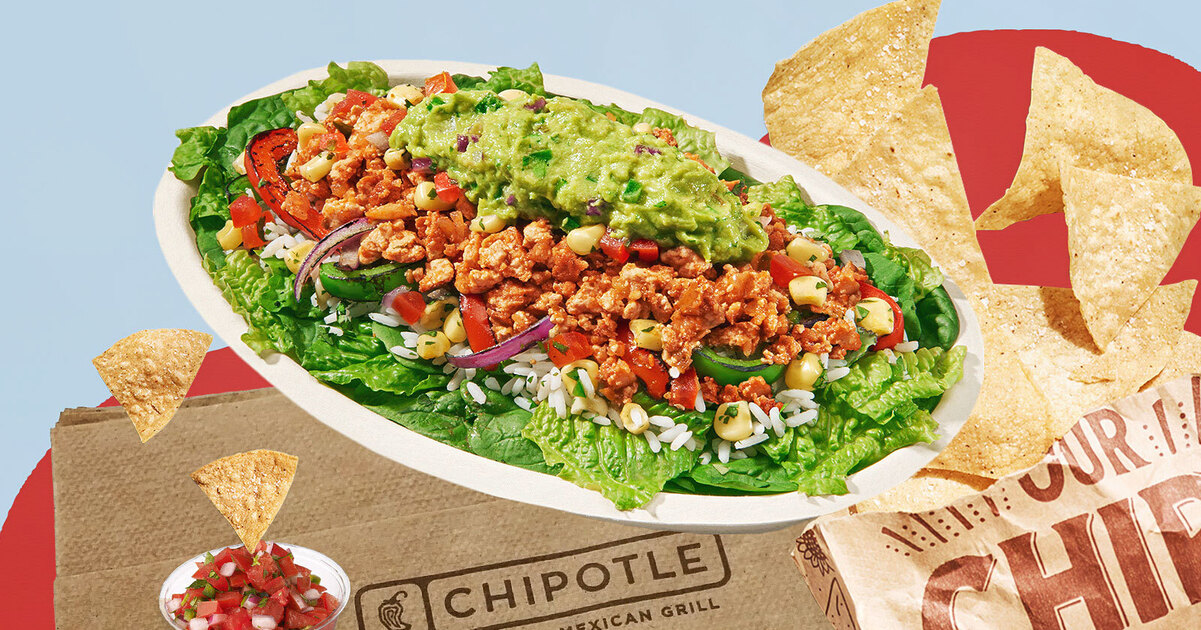
From tacos to burritos, these vegan hacks will make you crave Chipotle on the regular.Heres the complete guide on how to order vegan at Chipotle.
Source: vegnews.com

AI News Q&A (Free Content)
Q1: What are the key vegan ingredients one can choose when ordering a vegan meal at Chipotle?
A1: When ordering a vegan meal at Chipotle, customers can opt for a variety of ingredients such as rice (both cilantro-lime brown and white), black or pinto beans, fajita vegetables, sofritas (tofu-based protein), guacamole, and a range of salsas including fresh tomato, roasted chili-corn, and tomatillo-red chili. These ingredients ensure a fully vegan meal without animal products.
Q2: What is the significance of Chipotle's recent menu additions for vegan customers?
A2: In January 2023, Chipotle introduced two new vegan bowls: the Veggie Full Bowl and the Plant Powered Bowl. These additions cater specifically to vegan customers by including ingredients like sofritas, guacamole, and a variety of salsas, emphasizing Chipotle's commitment to providing plant-based options. These bowls are exclusively available through digital ordering platforms.
Q3: What are the health benefits associated with maintaining a plant-based diet as discussed in recent studies?
A3: Recent studies, such as the one titled 'Nutritionally recommended food for semi- to strict vegetarian diets,' highlight that plant-based diets can provide essential nutrients while minimizing health risks associated with high meat consumption like type 2 diabetes and weight gain. However, it also points out potential nutrient deficiencies, such as selenium, which can be addressed by careful dietary planning.
Q4: How does veganism align with ethical and environmental considerations?
A4: Veganism aligns with ethical considerations by rejecting animal exploitation for food, clothing, and other products. Environmentally, shifting to plant-based diets can reduce the carbon footprint, mitigate climate change, and promote biodiversity. This was emphasized in a 2025 review discussing European consumers' attitudes towards meat reduction.
Q5: What challenges do consumers face when transitioning to a vegan diet, according to recent research?
A5: Consumers transitioning to a vegan diet may face challenges such as ensuring nutritional adequacy, particularly in obtaining essential micronutrients like vitamin D and choline. Research suggests using nutrient-profiling approaches to identify recommended foods that provide a balanced diet, as seen in studies analyzing vegetarian diets.
Q6: What role does consumer perception play in the adoption of vegan diets in Europe?
A6: Consumer perception plays a crucial role in adopting vegan diets in Europe. Health concerns, such as the risks associated with high meat consumption, motivate some consumers to reduce meat intake. Nonetheless, perceptions are influenced by demographics, dietary patterns, and can create ambiguity in decision-making, as revealed in a 2025 literature review.
Q7: How has the popularity of veganism evolved since its inception?
A7: Veganism, coined in 1944, has significantly gained popularity, particularly since the 2010s. This growth is driven by increasing awareness of ethical, health, and environmental issues linked to animal product consumption. The movement continues to expand as more people recognize these benefits.
References:
- Least-cost diets to teach optimization and consumer behavior, with applications to health equity, poverty measurement and international development
- Nutritionally recommended food for semi- to strict vegetarian diets based on large-scale nutrient composition data
- Review: European consumers' attitudes towards the benefits of reducing meat consumption - the role of diverse and interconnected drivers.