
Summary
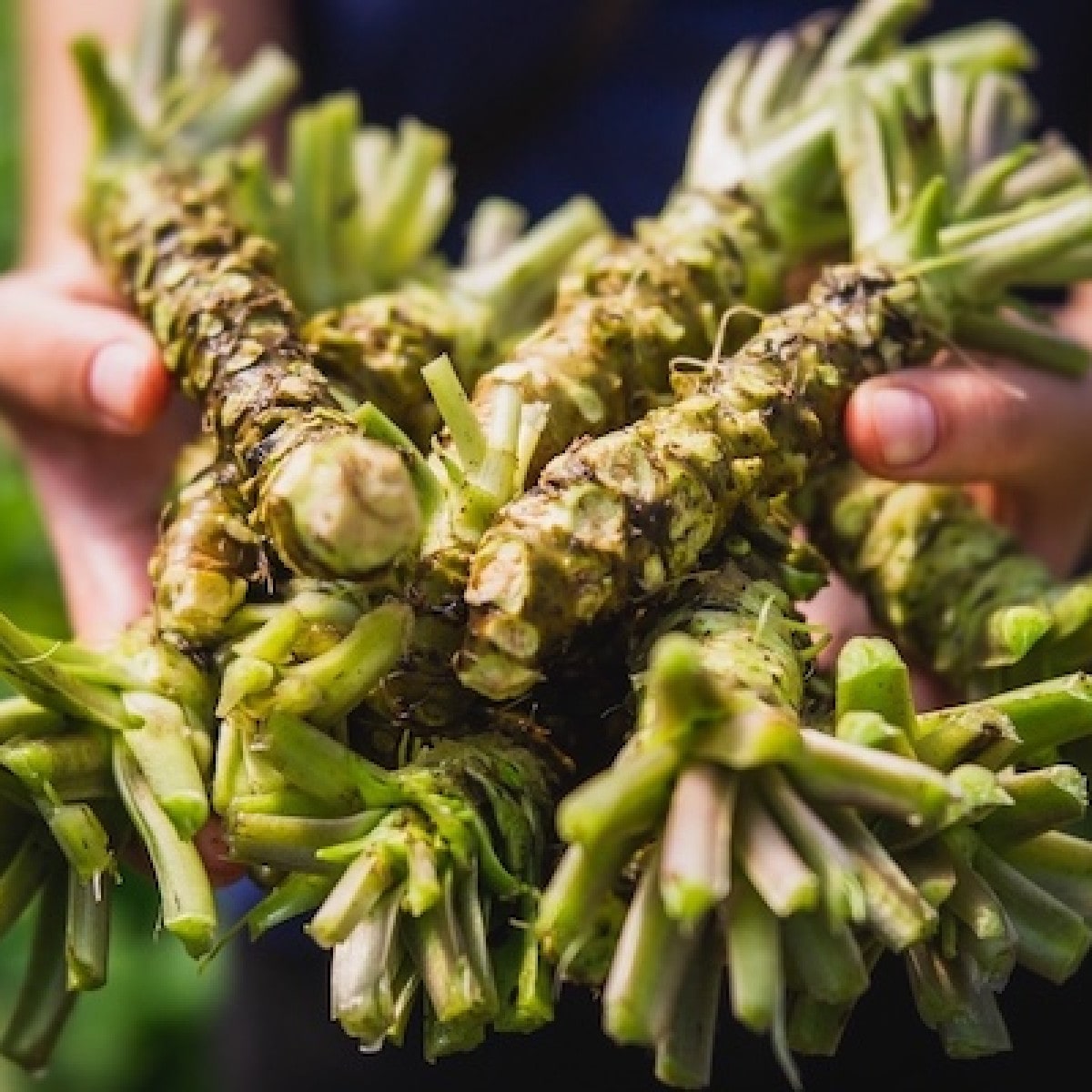
While most commercial wasabi is horseradish dyed green, the real root vegetable features a delicate flavor with a quick hit of heat.
Source: Vegnews

AI News Q&A (Free Content)
Q1: What is the difference between real wasabi and the commonly used substitute in restaurants?
A1: Real wasabi, derived from the rhizome of the Wasabia japonica plant, has a unique, subtle flavor profile with a quick heat that enhances dishes without overpowering them. It is often grated freshly, resulting in a gritty texture and a flavor that fades quickly. In contrast, the substitute commonly used in restaurants, labeled as 'western wasabi', is typically a mixture of horseradish, mustard powder, and green dye. This substitute has a harsher, more lingering heat and a smoother texture.
Q2: What are the potential health benefits of consuming real wasabi?
A2: Real wasabi is known for its health benefits due to compounds called isothiocyanates (ITCs), which have anti-inflammatory and antioxidant properties. These compounds may help protect against inflammation, enhance memory, and reduce the risk of cancer. Additionally, wasabi may aid in preventing food poisoning and promoting bone and brain health, although more human studies are needed to confirm these benefits.
Q3: How does wasabi contribute to the culinary experience in Japanese cuisine?
A3: In Japanese cuisine, wasabi is a staple condiment, particularly with sushi and noodles. Its sharp, pungent flavor enhances dishes by adding a unique zing. Wasabi is also used in noodle soups, as a condiment for grilled meats and vegetables, and to flavor salad dressings, marinades, and dips. Its fresh, complex taste is a valued part of high-quality meals in Japan.
Q4: What challenges exist in cultivating real wasabi, and how does it affect its availability?
A4: Real wasabi cultivation is challenging due to its specific growing conditions. The plant thrives in the cool, shady environments of mountain river valleys in Japan. These constraints limit mass cultivation, making real wasabi rare and expensive. As a result, the availability of authentic wasabi outside of Japan is limited, leading to the widespread use of horseradish-based substitutes.
Q5: What recent research explores the sensory perception of spiciness in foods like wasabi?
A5: Recent research has investigated the cross-modal spicy enhancement using odour and electrical tongue stimulation (ETS) to modulate the perception of spiciness. This study found that congruent piquant odours, such as wasabi, combined with ETS significantly enhanced the perceived piquancy without affecting the freshness. This research highlights the potential for olfactory stimuli to enhance spicy taste perception.
Q6: What are the nutritional components of real wasabi, and how do they compare to its substitutes?
A6: Real wasabi contains small amounts of nutrients like fiber, potassium, vitamin C, calcium, and iron. While these nutrients contribute to its health benefits, the quantities are minimal because wasabi is typically consumed in small amounts. The nutritional difference between real wasabi and horseradish-based substitutes is not significant due to the small serving size, but real wasabi offers more complex flavors and health benefits associated with its unique compounds.
Q7: How does the flavor profile of real wasabi enhance the dishes it accompanies?
A7: The flavor profile of real wasabi, characterized by its sweet, vegetal freshness, and floral aroma, enhances dishes by adding a clean heat that complements rather than overwhelms. This makes it a perfect pairing with sushi and other fine meals, as the subtlety and complexity of real wasabi's flavor allow the primary ingredients of the dish to shine.
References:
- Wasabi
- Is Wasabi Good for You?
- Wasabi Benefits
- Wasabi Health Benefits
- What is Wasabi?
- Cross-modal spicy enhancement with odour and electrical tongue stimulation.