
Summary
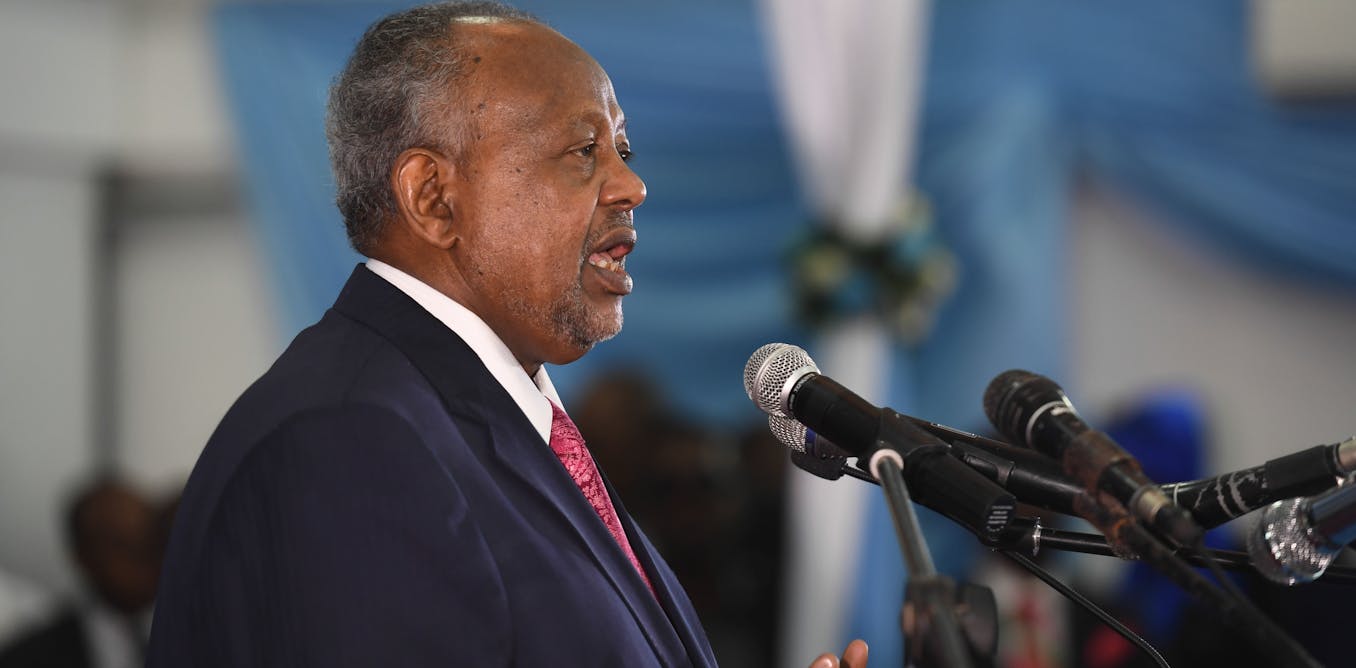
Djibouti is a presidential republic with a multiparty system, but political authority is highly centralised.
Source: theconversation.com

AI News Q&A (Free Content)
Q1: What is the current political system in Djibouti, and how centralized is political authority?
A1: Djibouti operates as a presidential representative democratic republic, where the president exercises significant control as both head of state and head of government. Despite having a multiparty system in theory, the political authority is highly centralized, with the ruling party, People's Rally for Progress, dominating the political landscape. This centralization limits genuine political competition and opposition influence.
Q2: Who is the current president of Djibouti, and how long has he been in power?
A2: The current president of Djibouti is Ismaïl Omar Guelleh, who has been in office since 1999. He succeeded his uncle, the first president of Djibouti after its independence in 1977. Guelleh has remained in power by removing presidential age limits, allowing him to extend his term beyond the typical constraints.
Q3: What role does Djibouti play in regional and international politics?
A3: Djibouti plays a strategic role in regional and international politics due to its location at the Horn of Africa, where the Red Sea meets the Indian Ocean. It is a member of various international organizations, including the United Nations and the Arab League, and serves as a significant military and trade hub.
Q4: How does Djibouti's electoral system impact the opposition parties?
A4: Djibouti's electoral system is structured in a way that heavily favors the ruling coalition, Union for a Presidential Majority (UMP). The winner-take-all approach and stringent registration requirements for parties have disadvantaged opposition groups, leading to harassment and arrests of opposition members, thereby restricting their operational capacity.
Q5: What are the recent constitutional changes made by President Guelleh, and how do they affect his presidency?
A5: President Guelleh has recently pushed through constitutional changes that removed the age limits for the presidency, enabling him to remain in power beyond the typical term limits. This move solidifies his hold on power and diminishes the prospects for political change or the emergence of new leadership in Djibouti.
Q6: What challenges do opposition parties face in Djibouti?
A6: Opposition parties in Djibouti face numerous challenges, including legal restrictions that require government registration to operate, media controls, and the use of state resources to favor incumbents. These barriers, along with the harassment and arrest of opposition leaders, severely constrain the political space for dissent.
Q7: How have international observers viewed Djibouti's elections?
A7: International observers from the African Union and the Arab League have generally considered Djibouti's elections as free and fair, despite the ruling party's dominance. However, the absence of opposition representation in the National Assembly and the systemic advantages for the ruling party raise questions about the true competitiveness of these elections.
References:
- Politics of Djibouti
- Freedom House report on Djibouti 2024
- Atlantic Council article on Djibouti